“Sharing with Indigenous Minority People but without Valuing their Cultural Identity and unaware of their Rights to Effective Participation in any Decision Making Processes would mean to double our Guilt we cause to these peoples and would create new form of poverty” – SPERI
Table of Contents
Introduction. 4
Major Questions for Evaluation and Scope.. 4
Evaluation Methodology. 4
Reforming National Key Farmers’ Network to MECO-ECOTRA and TEW/CIRD as SPERI 5
Why?. 5
How?. 5
Evaluation Findings. 7
MECO-ECOTRA.. 7
CBOs Engagement in the Local Governing Process. 7
CBIs in relation to Policy Lobby. 12
Relevance – Complimentarily – Efficiency. 13
Challenges of MECO-ECOTRA.. 16
SPERI 17
SPERI’s Engagement into Lobby Inter-Social Political Actors. 17
Challenges of SPERI 23
Future Plan 2007 - 2010. 27
For MECO-ECOTRA.. 27
Future Plan 2007 - 2010. 30
For SPERI 30
Bibliography. 32
Annex 1: Term of Reference for Internal Evaluation. 33
Annex 2: MOU signed between SPERI and Lao Cai Vocational Training School 37
Annex 3: MOU signed between SPERI and Ho Chi Minh National Political Academy 39
Annex 4: Nine Step Approach to Community Development of SPERI 41
Annex 5: Consensus Building by MECOECOTRA farmers towards Ecological Trading.. 43
Annex 6: Linkages with Academic Institutes in-and-out Vietnam; with media in-and-out Vietnam; and alliances with NGOs in-and-out Vietnam. 46
Annex 7: MECO-ECOTRA ten years orientation (2005-2015) program.. 49
Figures
Figure 1 – Networking Methodology between TEW/CIRD – SPERI and Key Farmers’ Network. 61
Figure 2 – Interest Groups-based Approach. 62
Figure 3 – The Landless Group-based Approach. 62
Figure 4 – Rights-based Approach to Policy Lobby. 64
Introduction
Two years conducting the transition from (a) NKFN[1] to the 5 MECOECOTRA[2] thematic networks and (b) from TEW/CIRD[3] to SPERI[4] have seen many changes. This internal evaluation aims to reflect upon what these transformations have and have not been achieving, what we need to improve, why, and how. The main part of the report looks at indicators of organizational and institutional changes in the 2005-07 reform. The report analyzes some key examples of CBOs[5] engagement in the local governing process, and CBIs[6] indicators in relation to policy lobby. The report ends with drafting future plans on improving our co-performance through collaborative partnering strategies between MECO-ECOTRA and SPERI; and how both of us can contribute to the general development philosophy worldwide.
Major Questions for Evaluation and Scope
Three major evaluation questions:
What have been seen as indicators of organizational changes (or OD[7])?
What have been seen as indicators of institutional changes (or ID[8])?
How have community-based organizations[9] been developed and nurtured (i.e. civil society development)?
Scope: Focus mainly in the 2005-07 reform period; nevertheless, it is important to offer some background of the 10-years reflection of development process of grassroots farmers[10] in Vietnam (facilitated by TEW/CIRD and CHESH[11]) as to provide critical inputs to why, what, and how MECO-ECOTRA and SPERI have decided to take reform initiatives in the 2005-07.
Evaluation Methodology
Draft a log frame on indicators of internal evaluation (applicable to 5 MECO-ECOTRA thematic networks);
Field visits and talks to civil society groups including farmers, coordinators, and CBOs;
Group divide (among SPERI staff) to assess each thematic network in field sites;
Information collection from monthly, quarterly, biannually, and annually reports;
Reflection with proposals;
Reforming National Key Farmers’ Network to MECO-ECOTRA and TEW/CIRD as SPERI
Why?
Transition from National Key Farmers’ Network (NKFN) to the 5 MECO-ECOTRA thematic networks
There were gaps of the old NKFN model (i.e. what we aimed vs. what turned out in practice). NKFN at the national level was unable to deal with changing needs and new initiatives from members at the local level. NKFN could not link up issues from local to national levels for policy lobby.
At the same time, significant number of farmers is far capable of coordinating and managing community development activities and wishes to remain at local yet expanding over region-wide levels.
Some key farmers feel more confident when sharing knowledge, experiences, and lessons learnt at the regional[12] workshops and seminars as key note speakers, resource persons, and/or social activists.
TEW/CIRD as SPERI
TEW/CIRD staff sees a need of shifting their role into facilitating linkages of NKFN issues from local to national policy forums for policy lobby; coordinating with farmers in co-conducting applied – action researches; and public awareness raising through publishing local voices – writings into websites and newspapers;
No longer conducting Community Development based activities, transformation will bring new opportunities for TEW/CIRD (in a new form i.e. independent research institute – SPERI) to make improvements in enhancing depth and breath of networks’ activities; partnering with MECO-ECOTRA farmers to engage their issues, voices and feedbacks into policy analysis through action and policy research (e.g. Rights of Indigenous Knowledge, Rights to Maintain Indigenous Cultural Values, and Women Rights in Resources Use);
MECO-ECOTRA farmers’ thematic network and SPERI
Inter-networking actions between MECO-ECOTRA farmers and SPERI staff will lessen the risks for farmers (as compared to they stand-alone), increase fair share and equality of opportunities between both; and hence, better promote Indigenous Rights Advocacy e.g. farmers and staff together participate in regional forums (e.g. civil society development and grassroots democracy);
How?
The 5 MECO-ECOTRA thematic networks:
Breaking down of NKFN at national level to the 5 specific MECO-ECOTRA[13] thematic networks i.e. smaller groups, more thematic i.e. specialized networks, more efficient in cross-communication, cross-learning and sharing, and cross-monitoring.
Facilitate democratic discussions for electing key persons to be thematic coordinators:
Herbal network (Mr. Vu A Giang, Hmong minority – Mrs. Vi Thi Hoa, Black Thai minority, Cham village, Hanh Dich commune – Diem, SPERI staff)
Handicraft network (Mrs. Ly May Chan, Hmong minority – Hoa, SPERI staff)
Customary law network (Mr. Cao Dung, Ma Lieng minority – Dung, SPERI staff)
Sustainable organic farming practices and the Farmers field school (Mr. Vi Van Nhat, Thai minority – Mr. Hoang Huu Phuoc, Mr. Tran Dinh Minh, Mr. Pham Dinh Mon, Kinh ethnic – Huan, SPERI staff)
Human ecology villages network (Mr. Vi Van Hoan, Thai minority – Mr. Xay Khu Zang, and Mrs. Noi, Hmong minority in Long Lan village, Luang Prabang district, Luang Prabang province, Laos – Mr. Elder Cao Dung and Elder Cao Ngu, Ma Lieng minority, Ke village, Lam Hoa commune, Tuyen Hoa district, Quang Binh province – Hong Anh, SPERI staff)
SPERI
Encourage local regional initiatives (e.g. workshops, seminars) to share lessons learnt and experiences in Natural Resources Management, Community Capacity Enhancement; Lobby Indigenous Peoples Rights for Mekong communities including Vietnam, Laos, and Thailand; encouraging more involvement of Indigenous Youths as semi-staff members of SPERI[14]; and facilitate the transformation process and handing over the rights to use and manage of these regional Farmers Field Schools (FFS) to MECO-ECOTRA farmers including youths;
Increase the quantity, quality, and frequency of critical discussions on thematic issues (e.g. community rights to land and forest, organic farming practices: certification and market, handicraft textiles and nature color dying methods, herbal community forests conservation, and fund-raise for networks) and will be integrated in the teaching curriculum in the Farmers Field Schools at different regions.
Increase dialogues and sharing between MECO-ECOTRA farmers with policy makers, applied researchers, activist professors, and media (e.g. means of websites (www.dolame.org)[15] and newspapers publish MECO-ECOTRA writings e.g. Literature on Weekly);
Improve linkages with Academic Institutes in-and-out Vietnam; with media in-and-out Vietnam; and alliances with NGOs in-and-out Vietnam[16].
Evaluation Findings
MECO-ECOTRA
There are positive and drawback indicators in the evaluation findings[17]. From 10 years (1995-2005) working closely with farmers, TEW/CIRD has witnessed both development and crises faced by farmers nationwide. Placed ourselves as the learners, we have seen forms of interest groups, coordinating boards at local and regional levels, community based initiatives be developed along with institutional initiatives (i.e. CBOs engagement and CBIs indicators).
CBOs Engagement in the Local Governing Process
(Volunteered, participated, and engaged by MECO-ECOTRA)
Engagement of the Savings & Credits Networking Group into Local Banking Process
Women used to be members of Savings and Credits Groups have now taken up important role in local government system. They give supportive policy implementation e.g. expanding Savings and Credits Group into larger Community-based Initiatives to help poorer families (i.e. Community Credits Trust Fund: allowed grassroots farmers to loan with low interest rates and/or deposit/withdraw credits[18]. Significant number of farmers showed willingness and trust to deposit their money into the Fund instead of State-based local banks. Initiation of Community Credits Trust Fund aims to promote traditional social values for the later Credits Strategy approach for local poor families. Through networking and sharing among members, local women realize some drawbacks of bureaucratic local banking system (due to high interest rates for credits loan). Many families show improvements in their livelihoods by proper use of credits loaning from Community Credits Trust Fund. This has changed local authority’s attitude[19] (i.e. official banking staff changed their way of thinking towards local poor families).
This strategy aims to change attitude of banking officials in terms of ‘giving-receiving’ credits phenomenon to the Poor.
Engagement of the Landless Networking[20] Group into Official Land Allocation Process
Women have actively involved in democratic discussions to demand equal rights to access, use, and manage land and forest. Since the beginning, TEW (Towards Ethnic Women) has committed to work together with women to bring about better access and rights for them in resources use and management. TEW carried out an action research in: “The role of TEW (and now SPERI) in lobby policy changes: women’s rights to land use – the case of Sinh Mun minority community”. The result turned out that women succeed in lobbying local governments to issue the Land Use Rights Certificate that certify their names in equal and stand before their husbands' names[21]. Together with minority farmers, since 1997 up to 2002, TEW/CIRD and CHESH have facilitated the allocation of about 37,000 hectares of land (forestland) to about 10,000 households including minority households. Recognition of Women Rights to Land/Forest Use and Management has become an official Policy Initiatives and taken effects in Land Law 2003, article 48, section 3. This is a live case illustrates that lobbying strategy of SPERI addresses concerns of Gender Equity over Resources Use Rights; and that an indicator shows degrees of engagement of local NGOs together with grassroots women trying to influence policy changing processes.
This strategy aims to illustrate that decentralizing the rights to forestland to individual households is more effective that remaining in the State-owned enterprises.
Engagement of the Sustainable Organic Farming Network into Local Official Land Use Implementation Framework
Sustainable organic farming networking has been the most influential thematic network among the five networks. By March 2006, about 80 farmers, coordinators, and SPERI staff took part in the Permaculture Design course (taught by Geoff Lawton, a colleague of Bill Morrison Father of Permaculture from Permaculture Institute in Australia). After the course, about 80 households[22] across the 5 regional field sites[23] have committed themselves to follow in principles and by practice the Biodiversity Farmhouse. All have taken organic farming practices in the daily land use behaviors. Most of farmhouse owners have changed attitude from thinking in monocrops/cashcrops to gradually now organic produces, alternative solutions, and diversity in plants and animals. Many have influenced neighboring families and communities.
The three regional FFSs (1) FFS in Simacai district, Lao Cai province; (2) FFS in HEPA, Huong Son district, Ha Tinh province; and (3) FFS in Dong Le town, Quang Binh province put highest priority on Sustainable Land Use planning by promoting highest level of independent thinking, innovative approach, self-responsibility, and self-finance of MECO-ECOTRA farmers. The recent contract[24] (dated August 22nd, 2007) on handing over the rights to manage FFS-Dong Le to MECO-ECOTRA farmers: “(a) promoting the independence, self-responsibility, and self-finance by MECO-ECOTRA members of the FFS-Dong Le field-school; (b) continued Networking Action Strategy (by members and for the members) means to increase frequency and quality of voluntary sharing among themselves; and (c) stimulating the current leadership members to continue nurturing the shared values and assist all the possible opportunities for the youths and other disadvantaged groups.”
All the FFSs encourage farmers and indigenous students to get involved in making the FFSs applicable of applied organic farming practices, biodiversity and nature conservation initiatives. All FFSs (and now FFFs) have made enormous influences and changes over attitude and behaviors of neighboring local communities, district and provincial authorities, research institutes in-and-out Vietnam, media and other NGOs activists.
This strategy aims to provide live pilots indicators (i.e. FFS) for lobbying the Strategy of Combating Land Desertification in Vietnam.
Engagement of Farmers Field Schools into the Formal Top down Vocational Training Curriculum and Teaching
Significant number of positive influences (effects) from the Farmers Field School e.g. FFS-Simacai and FFS-Dong Le has provided reliable indicators for SPERI to take strategic approach in stepping in as partner with formal educational system. The 1st training on Sustainable Organic Farming conducted by FFS-Simacai within the 24 months applying the Learning-by-Doing, Teaching-by-Learning methodology has gained indigenous students’ happiness. The training has stimulated in the Hmong, Nung, and Thu Lao indigenous students the dreams of making their future plans (i.e. farm pilots) to become Organic Farmhouses. An important MOU[25] has recently signed between SPERI and Lao Cai Vocational Training School with a third party i.e. Lao Cai department of Social Labor and Invalid. Below is an abstract from the MOU in which states and defines the role for SPERI. Lao Cai expects SPERI to become a strategic partner in future trainings on Sustainable Organic Farming (i.e. an indicator of engagement into the local governing process).
This strategy aims to improve the Ways of Teaching and the Capacity of building up curriculum in the Formal Vocational Training schools.
Engagement of Customary Laws into the Legal Framework on Forest Conservation
The pilot on Community based Natural Resource Management in H’Mong minority in Long Lan village, Luang Prabang province, Lao P.D.R has indicated a good practical learning and also sharing forum for the central policy makers, authorities, media, applied scientists and researchers, and educational organizations and development organizations. Agro-forestry Extension Service Department, Ministry of Agriculture and Forestry of Laos, Authorities from six southern provinces of Laos (Champasak, Bolikhamsay, Kham Muon, etc), Asian Development Bank (ADB), the Dong Dok National University of Laos, Dien Bien provincial authorities, Vietnam, and the Vietnamese Embassy to Laos have come to learn from the pilot.
By continuous efforts in lobbying the importance of integrating customary laws in the formal legal framework – July this year defined the first time ever in Laos, the traditional ‘Buot ton May’ ceremony of Lao Lum people in Xieng Da village, Nam Bac district, Luang Prabang province was co-organized by the grassroots villagers along with supports from authorities for conserving herbal medicine forest. Buot ton May’ ceremony normally worships the big tree spirituals. The ceremony has involved about 20 monks in different pagodas and hundreds of people in Luang Prabang province in forest protection; and that informally creating a religious networking among different civil society groups in forest protection. Authorities of Nam Bac district, Luang Prabang province has also recently agreed to allocate about over 55 ha of herbal medicinal forests to Xieng Da community based herbal medicine group. This clearly indicates an importance and that values of Indigenous Religious values of Lao Lum people have been integrated into Government policy in Community Forest Management.
This strategy aims to perform the informal power relations ran by community members towards Biodiversity and Environmental Protection.
Engagement of MECO-ECOTRA members into official members of the People’s Committee at communal and district levels
Many MECO-ECOTRA members have become official members of the People’ Committee at their communal and district levels. Many of them are women; naming as Mrs. Truong Thi Ba (now the Vice Chairman of Kim Hoa communal people’s committee, Tuyen Hoa district, Quang Binh province); Mrs. Nguyen Thi Thu (now a key person at the Communal People’s Council); Mrs. Nguyen Thi Binh; Mr. Nguyen Van Lai, Mrs. Cao thi Lan (Malieng minority woman becomes an example key farmer), Mrs. Cao thi Lam (Malieng minority woman who actively involves in activities of the Communal People’s Committee), Mr. Elder Cao Dung (Malieng prestige elder), Hoang Seo Lang (H’Mong), Mrs. Ly May Chan (extremely active Dao person), Vi Van Binh (Thai), Mr. Vi van Hoan (Thai), Mr. Chu Si Zang (Hmong), Mr. Xom Lit (Lao Lum), Thoong Phay and Bunchine (Khmu).
Farmers in Laos e.g. Mr. Chu Si Zang has now taken an important position at the district level to bring value of customary law of Hmong into the government law in land and forest management. Mr. Somlit from a member of the key farmers' network is now the village leader of Xieng Da village. He facilitated people in 6 neighboring village (e.g. Pheen and Kiu Ha, etc) to build up over 23 km of internal road systems based on participatory approach. Mr. Si Zi (Hmong) become head of planning office of Luang Prabang district, Luang Prabang province, Laos; Mr. Cu Seo Phu (H’Mong people) is now working in Simacai district, Lao cai province.
This is a real strategy for changing leadership vision and behavior in the formal beaurocratic system.
Effects indicators of CBOs that are beyond MECO-ECOTRA farmers’ networks
There are external CBOs, NGOs, officials, academics from regional, national, and international organizations visiting FFS in different regions (see annual report).
This strategy aims to expand this lesson learnt and experiences of MECO –ECOTRA into larger society.
Conclusion
In conclusion, examples of CBOs engagement in the local governing process are in diverse contexts, from different angles, and of different minority groups. The 10-years reflection of the development process of grassroots farmers in all regional field sites and the 2 years taking reform initiatives – both MECO-ECOTRA and SPERI have witnesses changes in terms of breadth and depth. The number of grassroots human resources involved in our activities increases so significantly and their frequency of engagement has been wonderful. In order to achieve better quality of engagement into the local governing process (i.e. when indigenous farmers realize even more important that their role has to play) then the degree of engagement needs to be more sharpened so that voices of civil society groups can be more effective in decision-making, and policy-making processes.
CBIs in relation to Policy Lobby
(Initiated and developed by MECO-ECOTRA)
o Along with the every single step of CBOs development; there are indicators of CBIs initiation and development respectively (i.e. CBIs Institutional Initiatives).
o At the key farmers’ level, they shared a Commitment of the 10-Doing-Together to manage and develop natural resources in the sustainable manner. Farmers express strong concerns and wanting to collectively improve resources degradation status. When farmers formed interest groups (e.g. landless group[26], rights to community forests group, gardening, animal husbandry, and savings and credits groups), their regular meeting often inviting members of local authority to participate to share knowledge, experiences, and concerns.
o At the regional coordinators level, farmers coordinate the cross-learning and sharing environment whilst conducting cross-monitoring among interest groups’ activities.
o By 2005, National Key Farmers Network and the Board formed an informal national agreement of which aimed to bridge voices and initiatives of civil society groups from the local to regional and national forums. This was for advocating issues into policy recommendations. Little outcomes were produced due to the lack of skills (e.g. lobby skills).
o At MECO-ECOTRA level, farmers in the Mekong expressed strong needs to link with each other to learn to deal with challenges of free market. It is important for SPERI to partner tightly with MECO-ECOTRA farmers so as to think of alternatives (i.e. promoting local initiatives; community based innovations; community based Trust Funds, etc).
o Making sufficient economy the future-reality is a way forward to all farmers in the network. Engaging more actors in CBOs to get involved and institutionalize sufficient economy as CBIs for them in the formal legal framework would be far more challenging.
Relevance – Complimentarily – Efficiency
In this report, both MECO-ECOTRA and SPERI reflected upon whether reform initiatives in the 2005-07 have been relevant in relation to enhancing of civil society development and grassroots democracy. The need of reforming was derived from the grassroots’ needs; thus, making decisions of reforming NKFN to the 5 MECO-ECOTRA thematic networks has been judged relevant.
Firstly, it is the smaller the better. Instead of national scale, reforming the 5 MECO-ECOTRA thematic networks would mean to reinforce the smaller scale yet at region-wide level. Voices of civil society groups including forms of CBOs through spaces created by these thematic networks would be more integrative, informal but convincing. This equally means that SPERI has been expanding the horizontal development of different civil society groups instead of promoting the vertical structure development. The 5 MECO-ECOTRA thematic networks have been placed equally important and that one is connected to the other and building on the inter-thematic networking actions.
The 2nd argument for the relevance is that if NKFN developed from different interest groups (including landless group, community rights to forest group, gardening, animals husbandry, and savings and credits group) and issues covered by these groups aimed at meeting the daily needs of the farmers network; then the 5 MECO-ECOTRA thematic networks develop these issues into more specialized and focus; and bring lights to more solution-based approaches. By nature, the 5 MECO-ECOTRA thematic networks are the solutions to solve problems/issues from the previous interest groups. Each thematic network provides one certain livelihood strategy/livelihood alternative in the chain of different alternatives. The 5 MECO-ECOTRA thematic networks together provide more options, more choices, and that wider alternative spaces for farmers to work, to resolve their own problems, and to be in the active position to exchange one product (from one thematic network) to the next product (of the next thematic network).
The 3rd argument of relevance is that the interconnectedness of these 5 thematic networks. One cannot exist without the others; or co-existence and co-development of the networks should be done together. The logical interconnections are argued that (1) after the Lobbying on community rights to land; then (2) some solutions must be shared to the farmers (i.e. Sustainable organic farming by household and community pilots and the Farmers Field School). Farmers would need to find some markets even niche markets to exchange their products and that the suitable market-scale would be at micro level (i.e. micro-enterprise for green and ecological products at the local market including handicraft textiles, herbal medicinal plants, and other green vegetables). To maintain the harmony between market and social community values, customary law and watershed forests management network would play a key role in collaborating with other networks. Lastly, in order to make influences at largest scale (society at large); the network on Information sharing in the local means of media has been judged as the relevant medium for getting the message heard and received by the largest audience for local benefits.
The 4th argument is that, by reforming into these 5 networks would mean to increase the autonomous and decentralized yet cooperative networking actions. At the same time, as they happen in the smaller scale but region-wide, then sharing of knowledge in relation to each thematic issue would be easier. Intergenerational equity in particular knowledge transformation can happen at the quick rate; high frequency; large in quantity; and relevant in quality in the networks between elderly and youths, as one minority youth can communicate directly in his/her own language to the elderly of the same minority.
Continued improving and strengthening rights (or capacity enhancement) for the 5 MECO-ECOTRA thematic networks would mean that MECO-ECOTRA and SPERI in this current and future collaborative partnership are preparing, by reforming initiatives, to address the better social relationships, dealing with economic challenges from free-market and regionalization concerns; at the same time, we seek to improve social political positions and civil rights of farmers in the Mekong region-wide.
MECO-ECOTRA administrative efficiency
Please see details the organizational structure and coordination of each thematic network in each progress report.
Sustainability and sustainers
Enhanced capacity to maintain philosophy and the sustainability of the networks
The arguments for addressing sustainability of these thematic networks have been judged around that (a) the current mission, strategy, and priorities have been fully decided by members of the networks; (b) farmers members reach the highest degree of confidence by enjoying the largest freedom space (created by the networks) to decide which direction they should moving forward and what they can contribute to the formal system; (c) members of one network well-coordinate with others in other networks and each has certain specialization (by each thematic network); and (d) there are strong transmissions of knowledge within thematic networks (herbal – handicraft – savings and credits – organic farming practices – and customary laws), between the youths and the elderly, and also cross-learning and cross-sharing between women and men. And these promote the enriching traditional social values and volunteerism. ‘For instance, about 1,200 members meet in monthly in every commune; and if to estimate in 2 years, about 28,800 members have participated voluntarily in discussion in their communes.’
Financial sustainability – capacity to create diverse financial sources
In terms of finance i.e. forming Community Membership Fees or forms of Community Trust Funds, these are the initiatives from the networks to think of alternative strategies to earn incomes, seek memberships contribute to the network e.g. (a) fees gained from training courses and exchanging study tours which would be contributed by other NGOs, CBOs visiting our field sites; (b) fees gained from voluntary learning and sharing (kind contributions); (c) fees gaining from lecture hours, tutoring the youths in farmers field schools; (d) fees gained from renting out our FFS(s) for workshops and seminars; and (e) fees contributed in-kind by farmers when they deliver key-note address or speeches from different forums.
Challenges of MECO-ECOTRA
There are many indicators of how farmers, CBOs, and other civil society groups have engaged into local governing processes - aim at making some minor changes for the better and secured livelihoods. New challenges, however, have always been emerging; and that often limits civil society development or enhancing democracy at the grassroots level in particularly the political context in Vietnam:
1. There is no legal framework for CBOs initiatives so restricts the expansion of CBOs[27]. Therefore, the degree for enjoying healthy competition between CBOs and other state-based organizations e.g. mass organizations is not opened. Spaces for voicing concerns at the deeper level of different CBOs have still been limited. Many aspects of a good traditional civil society would be threatened as of the un-recognition of formal legal framework for institutionalize CBOs activities. A healthy civil society spirits with strong volunteerism would become fragile due to impacts of ‘the dark-side of civil society’.
2. Numerous farmers groups in MECO-ECOTRA networks have been attempting to nurture values in maintaining social cultural identity through lobbying new legal initiatives on Community Herbal Forests conservation practices; yet, there lacks a legal framework to support Community Rights to Forestlands.
3. CBOs in the 5 MECO-ECOTRA thematic networks are working towards trading of ecological (i.e. green, clean, and natural-based) products. The enabling environment for trading these MECO-ECOTRA products would only occur in the niche; despite the much larger influences of the mainstream consumerism of the “big brands”.
4. Given the current growth and ‘borrowed’ development in Vietnam, there are and will be conflicts between seeking ways for income generation and maintenance of social values in household farming.
5. Large-scale development projects (e.g. hydropower dams, mineral explorations, and import of new industrial plantations) have been taken place in the most fragile highland ecological systems where MECO-ECOTRA farmers are living. And that, not many local Vietnamese NGOs show strong commitments in lobby strategy (i.e. against free market and large scale development projects) to help MECO-ECOTRA farmers to realize problems and consequences of free market and large scale development projects. Large scale development projects occur in the across-border regions (equally important to minority identity and biodiversity linkages that have no boundaries, from minority point of view).
SPERI
SPERI’s Engagement into Lobby Inter-Social Political Actors
Finding 1: SPERI engages with local, national, and regional media
Shifting from a position that was anti-media and anti-official in the past, SPERI has changed – deciding to engage into public news and media[28] (e.g. Literature on Weekly, Sai Gon Economics Times, Vientiane Times, Outer Voices USA, and so forth). This engagement is not because of self-promotion for SPERI; instead - SPERI realizes the power of communication (i.e. through means of local media, or websites technology) in order to update regular information and for information sharing purpose. SPERI took the very initial approach by changing itself to share more with local and national media[29].
This strategy promotes better sharing between SPERI and media networks to voice up indigenous concerns to reach the larger audience.
Finding 2: SPERI works with VUSTA with an aim to expand civil society actors
TEW/CIRD and CHESH (SPERI precursor’s organizations) used to be under VUSTA management. Yet, much of the TEW/CIRD and CHESH’s works has had positive influences at the grassroots level and expand to external CBOs. VUSTA at the central level started to ask SPERI to join different VUSTA’s forums to share SPERI’s experiences and lessons learnt.
By 2001, the International Conference on Rights-based Approach to Poverty Alleviation organized by VUSTA, VUSTA gave SPERI a status to supervise and facilitate the main content and methodology. SPERI also shared case studies, resource materials, and advice key farmers to speak at the Conference. SPERI’s methodology towards Poverty Alleviation gained much respect. From that onwards, SPERI was asked, in voluntary, to supervise VUSTA-ICCO cooperation directions e.g. VN086011, VN086031, VN086041, and VN086051. During these times, SPERI’s local – regional field offices started to step up to become representative offices of the central VUSTA at different local areas.
In the SPERI’s dreaming, this is how CBOs together with local NGOs (including VUSTA) should act upon the same path to expand civil society development. Along the way, however, the central VUSTA discontinued to share its vision with SPERI unfortunately.
SPERI took a decision to step out VUSTA, be independent (with the supportive legal framework - latest Circular 10 dated 24 August, 2005 under the Law on Science and Technology). About half a year working hard and continuous challenges, SPERI was officially registered as an Independent Research Institute (5th June 2006 as a merge between TEW/CIRD).
This strategy promotes local – regional – national interconnected spaces to practice decentralization practices between VUSTA at central level and the leveling up of grassroots voices for policy lobby.
Finding 3: Engagement of high-ranking officials
Awareness raising for high-ranking officials e.g. SPERI facilitates exchange visits for National Assembly Legislative Officers, Official Lawyers, Vice Minister of the National Committee on Ethnic Minority, Members of Law on Association drafting’s team, Media, Independent Lawyers from NGOs to learn about civil society issues in Hungary, Netherlands – LTO[30], BBO[31], APRODEV[32], Minority Right Working Group[33] – London, and Ministry of Justice – Netherlands.
After continuous exchange visits in the 4 years since 2002, high-ranking officials have learnt to realize, recognize the nature of civil society from European experiences. They also learnt legislative, executive, and jurisdictional processes and practices in the EU. The idea of “State belonged to the Peoples” in legal theory in Vietnam has been illustrated much clearer in practices of everyday’s livelihoods of EU citizens. The concept and practice of lobbying in relation to civil society development have also been addressed. EU citizens have been well aware of their rights to participate in the legislative-making, to demand good practices in the legal execution, and also transparence in any decisions made by jurisdiction.
The Vietnamese high-ranking officials also learnt the most important lesson in a Representative Democracy Environment is that EU governments giving grants to civil society groups/organizations so to gain critical comments and lessons from these groups. This is how EU governments grow and shape their self-development process. Many high-ranking officials also learnt the necessity of lobby work and the importance of lobbying so to gain holistic views from different social reactions/social feedback from civil society groups. Making decisions without learning from social feedback and criticisms would not be relevant.
After these visits, the success of SPERI was an ability to transform issues and concerns of SPERI (of which originated from issues and concerns of minority communities) to issues and concerns of the officials. An outcome indicator was the organization of the first International Lobby Conference: “Lobbying: Practice and Legal Framework”. Mr. Chairman Nguyen Van Yeu (Vice President of National Assembly Congress XI; also Head of Legislative Committee of National Assembly’s Standing Committee) and his legislative department colleagues coordinated and concluded that: “Lobby must be legitimately accepted by Law and in practice” (see http://sperilobby.org/index.php?act=news&nid=21);
This strategy builds linkages between civil society groups and governmental officials so that issues of indigenous minority identity, values are more recognized and took action-based approaches.
Finding 4: Engagement of students’ generations
SPERI welcomes volunteer participation of students from national and international Universities (e.g. students from University of Humanities and Social Sciences; National Economics University; University of Natural Sciences, the Australian National University) to field visits the SPERI project sites of marginal minority communities (e.g. Ma Lieng, H’Mong, Thai, and Dzao minorities). SPERI encourages domestic and international students to make use of applied-work from TEW/CIRD and CHESH to turn into Advanced Studies for Master and PhD students. Erik Friberg from Lund University, Sweden conducted a study on: “Informal Participation of Minority Population in Public Life”; and has applied almost all the approach and results of SPERI to analyze in his thesis. Another female Master student does a study on “Gender based Social Capital” (from Cornell, American University) – and she well-integrated a full spectrum of SPERI’s Key Farmers Networking Action approach – using Quang Binh farmers’ networking as a case study.
Integrating applied and action research studies from MECO-ECOTRA farmers and SPERI into Advanced Studies level i.e. Master and Post-graduate papers are the key strategies to share results, approach, and also situations – sufferings of indigenous struggles; and hopefully, to seek some solutions for indigenous communities.
Finding 5: Engagement with scholars and professional development advisors
SPERI took an approach that integrating all outcomes and resource materials from applied and policy research cases and shared to the leading intellectual activists in the field (e.g. Prof. Chayan Vaddhanaphuti: a life-long committed person who advocates and finding ways to building the Commons through studying Politics of the Commons); the case on Community Forests using Truong Son forestry cooperative as a study to Prof. Richard Baker, the Australian National University. SPERI also shares its findings of conflicts and crises during the development process to independent consultants e.g. Mr. Fulco van Deventer. SPERI seeks opportunities to learn ways of conflicts resolutions through lobbying, creating spaces for dialogues between high-ranking and the grassroots e.g. learn from Mr. Govert van Oord (BBO), Mrs. Margreet Mook, Mrs. Odile Ruijs;
These strategies aim to enhance capacity, skills, and experiences to upgrade issues faced by the grassroots to more lobbying policy changes.
Finding 6: Engagement into the draft Law on Association.
As derived from grassroots needs, a legal framework such as the Law on Association would open the new legal (legitimate) space for CBOs to enabling its operations and therefore produce some CBIs initiatives (i.e. institutionalize the social capital development). As part of a development process for SPERI, it engages into the draft Law on Association by playing the different roles (see http://sperilobby.org/publication/3/lobbying-law-on-associations.htm)
The 1st role it plays is as an Independent Observer – SPERI makes critical comments of the draft: (1) realistic/unrealistic, (2) openness versus conservative attitude by considering the language of official law-makers, and (3) transparency versus ambiguity aspects from the draft.
The 2nd role is as an Advocate for the Commons i.e. SPERI shares all information and its criticisms to the public-wide (involved farmers, local authorities, and different social actors) through opened forums at different cities and local provinces.
The 3rd role is as a Facilitator to raise official awareness on Lobbying issues among high-ranking officials.
The 4th role is as an Invisible Lobbyist, outcomes and achievement from the above have changed attitude and behavior of the key leaders (from National Standing Committee, National Assembly) on civil society. It was the members of Legislative Committee of the National Assembly proposed an opening of the International Conference on: “Lobbying: Practice and Legal Framework” (see http://sperilobby.org/data/publication/Lobby%20Conference%20Report.pdf). The key focus was to build linkages between legislative makers, independent legal professions[34], and CBOs representatives (i.e. civil society groups and local NGOs (see: http://sperilobby.org/news/53/analytical-feedback-can-motivate-societal-development.htm).
The 5th role was that SPERI submitted a (new) draft Law on Association made by SPERI lawyers’ team in February, 2006 (see further in publications in: http://sperilobby.org/data/publication/Draft%20Law%20of%20association%20composed%20by%20TEW-CHESH-CIRD.pdf).
The three key arguments are (a) the draft minimizes the Role of State management; (b) opening largest spaces for the rights to and of Associations; and (c) integrate the role of Justice Court who owns highest power to resolve any disputes in the dissolution of Associations. These 3 points are not in the 2 drafts made by MOHA and VUSTA.
All of these, SPERI aimed to push changes must be made in the macro policy thinking and policy making processes in order to facilitate better spaces for political civil rights of CBOs groups i.e. indigenous minority peoples.
Finding 7: SPERI initiated the across border concerning Mining, Hydro power and Commercial Plantation along Mekong region
In the ICCO consultation conference in Chiang Mai in November, 2006; Odile Ruijs shared a news that a million hectare of forests land in Mondolkiri Cambodia was sold to BHP Billiton for mineral exploration (the area of hundreds of thousands of minority people are living). SPERI took this initiative to do a Brainstorming between Odile Ruijs, Kees de Ruiter, Roger Henk (ICCO coordinator in Cambodia), Christian Erni - IWGIA, and David Allan – International World Concerns.
After the consultation meeting, SPERI continued to brainstorm with Margreet (SPERI’s lobby advisor), Douglas (an ex-BHP expert but volunteered in SPERI), and others in December 2006; and kept regular contacts with Mr. Roger Henk in Cambodia. In February 19-20, 2007, two SPERI seniors (Tuan and Margreet) flew to Phnompenh together with Mr. Roger to do the 1st Round-Table Discussion; at this meeting, SPERI also share all covering cost to invite Mr. David Allan (World Concerns International, Myanmar) to participate this Round – Table meeting. About 13 participants from concerned organizations[35] were involved and discussing.
Outcome from this was opened up the 2nd Round-Table Discussion with 7 participants from concerned organizations[36] to detail the action plan for the 6 countries in the Mekong region and asked AIPP to help organizing, and calling for volunteer participation of members of the Steering Committee.
By this strategy, SPERI dreams to see multi-social actors get involved in gaining better understanding of post-impacts caused by these large scale development projects which consequently will destroy social – cultural – biological – environmental – political civil rights of indigenous communities living along the Mekong river basin.
Finding 8: Farmers Field Schools engage into Formal Vocational Training Curriculum i.e. Teaching-by-Learning and Learning-by-Doing approach[37].
As explained in page 9 in this Report, the strategy of stepping up all the approaches and efforts (in relation to local traditional knowledge, NRM[38] by farmers field schools) SPERI has become an expert provider in facilitating new relevant teaching-by-learning and learning-by-doing methodology (see MOU between SPERI and Lao Cai vocational training school in Annex 2 in which defines clearly 3 roles for SPERI).
Farmers Field Schools have become practical inspiring pilots on Land Use Planning by respecting and reviving the Local Traditional Knowledge in slope land areas and where fragile and highly sensitive ecological systems have been facing. Development and operation of Farmers Field Schools aim at transfer the emotion and turn into practice of this ideology.
As of this inspirational effect, FFS in regional field sites have been invited to become expert provider in the new local-knowledge-based initiative in Curriculum-Building and Teaching method.
Finding 9: SPERI co-research and publish our applied research works with Ho Chi Minh National Political Academy[39]
With all above inspiring achievements, it is timely for SPERI to be in confident position to partner with Ho Chi Minh National Political Academy. Two areas of partnerships are (a) to do co-research, and (b) to publishing on indigenous wisdoms, local knowledge, and the indigenous minority concepts and theory. (See details indicators by MOU in Annex 3). SPERI also expects to facilitate alternative development theory and approach to the key future leaderships of Vietnam in order to make improvements in governing process at all levels.
Challenges of SPERI
Despite efforts in making the society the better place for the marginal minorities, SPERI in its transition to a semi-independent research institute has to face many challenges; and the key one is to deal with ideological constraints.Strategic Challenges over Ideological ConstraintsThere are two mainstream ideas that are reversal to SPERI's thinking.The first is Darwinist evolutionary theory which lack of full and proper understanding in Vietnam. Significant number of educational materials has been influenced by the view; therefore, referring minority groups as the backward ones. Millions of students are consequently blown in their minds the similar views that affect their attitude and behavior when working with minority groups in the later stage. The lack of proper understanding of these students, even almost local NGOs – representative INGOs in Vietnam (operated by Vietnamese staff) – United Nations in Vietnam, (who later take up important jobs in their career) often causes their writings, research studies, or approaches to implement alleviate poverty/reduce hunger programs are irrelevant (i.e. cultural insensitivity to the minority groups). The language of legislative making and law implementation processes often divide a differentiation in treatment between minorities and the majority. Attitude change and transformation to a new view towards minority communities will be a national challenge. There are signals that minorities in Vietnam-wide and across the continents stood up to demand for equal rights and social justice.
Influences from this mainstream thinking can erode many social values including traditions and customs of minority communities. Making revolutionary approaches in the education system are therefore necessary.
The second is that many institutions as of being influenced by this way of thinking create within themselves a dictatorship manner in the language of law-making and policies-implementing processes. Governmental officials making the laws and policies for ethnic minorities are in accordance to values, standards, and by criteria of the majority. Ignorant attitude in learning from minority’s social traditions and their identity values happen too widely in the institutions. SPERI proposes a policy reform to wash out this ignorance towards minorities.Poverty alleviation and hunger reduction is a clear example of the "giving - receiving phenomenon". Due to poverty, minority has been continuously received but they do not actually know why, how and what they should receive. Since 1960, "utopia socialism" succeeded in eroding social values including religion and beliefs of minority communities (of which these values have been formed from thousands of years by living with nature of the communities). By seeing "minority as backward" and reusing the "giving - receiving" phenomenon would double the guilt governmental programs made to minority groups. There are signals of crises over trusts between minority groups and the majority (inc. governmental officials, State programs).
What, where and how SPERI face these challenge to live new dream and plan new actions?! (See all above CBO, CBI, and SPERI engagement explanation) SPERI builds its development concepts - definitions - and theories after years of working closely with and learning from indigenous minorities. The initial assumptions were that minorities lack opportunities due to isolation of access that led to unconfidence. With isolation and unconfidence caused by the dominant system, indigenous minorities became no ownership of everything: presenting ideas, opinions, and rights to access, and to secure to their ancestors’ resources. All together would destroy identity values and cultural wisdoms.
SPERI brought into a new approach[40] i.e. an interface whereby values and identity of marginal communities are heard and recognized; a space that maximizes opportunities for multi-participation, involvement, and enjoying democratic voices, cross-cultural learning, and shared-knowledge of different minorities in the co-existence, co-adaptation, and co-development processes.SPERI learnt from minority communities of community development is that, "It is the harmony between the use of resources for human needs, human spiritual values in relation to nature appreciation and maintenance of unique cultural identity of such community." There is a clear indicator of respecting human nature relationships and minority communities in their living environment have formed and living with – not abusing the nature. In their daily behaviors, they respect and nurture the surroundings and this is similar to Human Ecology in practice.Applied human ecology practices exist in the daily lives, and have become the unwritten norms in minority’s everyday behavior. Applied human ecology practices perform in also the humanity relationships (i.e. how one treats to the other and vice versus). A community that is human-ecological oriented would mean such community is able to maintain healthy relationships among its members; and also harmonious interrelationships between human andnature. The community knows bests the way to adapt to and live with within the natural capacity. The community can select what and what not remain in their belief, religion, traditions, and identity values through natural revolutionary processes. SPERI makes use of applied Human Ecology theory so that to help realizing that: “Development is a positively competitive process whereby one finds her own way to grow, adjust, and readjust the adaptive capabilities and creativities. Minority communities are likewise, they are the ones who learn to live with the nature, at the same time fighting with nature, and readjust certain behaviors to meet with natural uniqueness. Development process such as this would lessen the risks of assimilation; yet promoting natural adaption and harmony among organisms, among species, between ethnic groups, and across the societies of different cultures and political systems.”
Traditions of one community are formed during the process of living with nature. This process is for the maintenance of social values, cultural norms, and indigenous beliefs. Many spiritual ceremonies like matriarchic legend, 'Giang' worshiping, 'Giang San' worshiping, Land spirit worshiping, Stream spirit worshiping, and so forth are to nurture humanity values of such community. Behaviors among community members: between the elderly and the youth, clan leader and families, between traditional village elder and village head, village elder and community members should be similar like behaving towards nature.These are differences in terms of attitude and practices towards Nature of the minorities compared to the majority. SPERI continues its learning process and the lessons that SPERI learns are the foundation to forming applied lectures and empirical lessons to share with SPERI’s partners. Applied Human Ecology framework is equally to what SPERI learns from targeted minority communities, and this is the theory that drives SPERI from philosophy to all practical working since the beginning.The MOU signed between SPERI and Ho Chi Minh National Political Academy is therefore the really important strategy in opening up a new future for integrating applied Human Ecology practices and theory to the key policy makers, future leaders in the Academy. This is done through sharing issues on community practices on respecting human nature, indigenous knowledge practices, indigenous beliefs towards Nature, and human living with ecological system. SPERI aims to advocate for an alternative to the current mainstream thinking and development approach.
Mid and short-term challenges of SPERI
1. After the reforming, SPERI’s main function is to consult and facilitate for MECO-ECOTRA. How to propose of an alternative approach toward the better recognition of CBOs’ role in the legal framework? How to facilitate an alternative approach on conflicts transformation between CBOs and mass organizations?
2. How to lobby the recognition of the role of customary law in the legal framework by increasing dialogues between MECO-ECOTRA and inter-ministerial representatives? (e.g. Ministry of Culture – concerning the recognition of local wisdom, local situated knowledge, and cultural values of indigenous peoples; Ministry of Health – concerning the recognition of traditional healing practices by uses of herbal medicinal plants; Ministry of Natural Resources – recognition of indigenous peoples’ rights to community herbal forests initiatives).
3. How to create linkages between organic producers in the MECO-ECOTRA network and other networks? Shared vision. How to promote local-based initiatives in organic farming production in regional and national scales? How to facilitate family-based enterprise and community enterprise initiatives to assist in marketing MECO-ECOTRA organic products?
4. How to improve Curriculum and Teaching method in FFS- teaching and learning environment for effective education for young indigenous minority?
5. How to lobby the Ho Chi Minh National Political Academy to publish works and researches being studies by MECO-ECOTRA and SPERI? How to step up in doing collaborative study papers on policy and theory researches between colleagues of SPERI and Ho Chi Minh National Political Academy?
Future Plan 2007 - 2010
For MECO-ECOTRA
Challenge 1: No legal framework for CBOs initiatives so restricts the expansion of CBOs[41].
Without legal framework, what happens when CBOs become independent (self-finance, self-confident, self-decision-making) organizations? What happened to conflicts occur between governmental departments and these grassroots CBOs? Many operations and community regulations initiated by CBOs would become illegitimate.
In strong connections with the draft Law of Associations, there are no improvements in the 11th version created by MOHA (from 1993 to 2006); and the 13th version (currently in the hands of Legislative Department of the National Assembly from 2006 to 2007). Without further discussions and gain critical comments from CBOs (i.e. legal entities under this Draft’s taking effects) might be dangerous. It is the new challenge for SPERI to continue doing Social Political Research in this Development context.
Language of the law-making in the 13th version does not reflect a genuine process of democratic participation of CBOs, civil society groups. It is the abusing language of powerful (elite – bias) policy makers (only reflect power relations) to make the law in serving the interests of a certain group, not civil society at large. In the meantime, MECO-ECOTRA is not strong and confident enough to deal with this. It would require a much higher power to analyze the current power relations - (power of power analysis). CBOs like MECO-ECOTRA and local NGOs like SPERI require stronger alliances in lobby effective changes for the benefits of current and future civil society groups;
Challenge 2: Lack a legal framework to support Community Rights to Forestlands.
Continued studying the nature of this management by uses of various pilot examples for comparisons and analysis;
Learn lessons of Lobby Community Rights to Forestlands (using Karen Community Forest Management, Chiang Mai, Thailand and the Nazi group, Yunnan, China as examples);
Challenge 3: MECO-ECOTRA products are in the niche versus the Mainstream consumerism:
Continued strengthening local markets by increasing exchanges, local fairs;
Organize exchange visits for MECO-ECOTRA farmers to visit ISAC[42] organization, Chiang Mai, Thailand; to visit LTO organic farming in the Netherlands;
Build linkages between Mekong farmers and the EU farmers to gain integrated market (North – South agricultural exchanges); the meaning behind i.e. to improve social political and hence economic positions for farmers in this WTO[43] context;
Challenge 4: Given the current growth and ‘borrowed’ development in Vietnam, there are and will be conflicts between seeking ways for income generation and maintenance of social values in household farming.
Costs - benefits studies; costs effectiveness analysis; costs – social impacts recognition; and costs – ethics inevitableness; all of traditional farming including values, morals, healthy social relationships existed in the past; but due the market influences – these values have been modified.
Attitudinal change and behaviors between producers, intermediate-men, service providers, and consumers and the ethics of these chain-relationships remain challenging.
Require the most longest-term strategic thematic-program approach farmers, CBOs, local NGOs, media, students, researchers, policy makers, business sectors, and donors to all get involved to increase public awareness;
Challenge 5: Large-scale development projects (e.g. hydropower dams, mineral explorations, and import of new industrial plantations) have been taken place in the most fragile highland ecological systems where MECO-ECOTRA farmers are living. At the same time, very few local Vietnamese NGOs show strong commitments in lobby strategy (i.e. against free market and large scale development projects) to help MECO-ECOTRA farmers to realize problems and consequences of free market and large scale development projects. Large scale development projects occur in the across-border areas (equally important to minority identity and biodiversity linkages that have no boundaries, from minority point of view):
SPERI voluntarily work together with Mr. Roger Henk to initiate the Round-Table meetings in Phnompenh of which outcome the recent Chiang Mai conference in September 28, 29/2007 on Gathering CBOs in the Mekong region to voice up and lobby against Hydropower, Agro-Business, and Minerals Exploration.
Promoting multi-social actors get involved in gaining better understanding of post-impacts caused by these large scale development projects which consequently will destroy social – cultural – biological – environmental – political civil rights of indigenous communities living along the Mekong river basin. E.g. this is why SPERI inviting David Allan and covering all his costs to come to Phnompenh from Myanmar (World Concerns International, Myanmar).
Future Plan 2007 - 2010
For SPERI
Challenge 1: How to propose of an alternative approach towards the better recognition of CBOs’ role in the legal framework? How to facilitate an alternative approach on conflicts transformation between CBOs and mass organizations?
Conducting a study on CBOs movements and CBOs initiatives (inviting independent consultants, scholars, legislative makers);
Facilitate local authorities and MP[44] representatives to open forums and discussions between CBOs and mass organizations to share lessons (organized by independent consultant e.g. CODE, lobbyists);
Challenge 2: How to lobby the recognition of the role of customary law in the legal framework by increasing dialogues between MECO-ECOTRA and inter-ministerial representatives?
Organizing exchange visits of healers in the region (Vietnam, Laos, Chiang Mai-Thailand, and Yunnan-China);
Doing exchange visits for ministerial representatives to community forest protection sites (e.g. Chiang Mai, Thailand; and Yunnan, China);
Organize seminars and workshops on the concerned topics such as the Role of Customary Laws etc; (e.g. invite legislative drafting team, scholars, media, etc);
Publish findings of different case studies on such concerned topics in public media, books, and websites;
Challenge 3: How to create linkages of organic producers between MECO-ECOTRA network and other networks? How to promote local-based initiatives in organic farming production in regional and national scales? How to facilitate family-based enterprise and community enterprise initiatives to assist in marketing MECO-ECOTRA organic products?
Build linkages internally and externally of organic producers; organizing fairs of local-based handmade products;
Organizing exchange visits of organic producers in the region (Vietnam, Laos, Chiang Mai-Thailand, and Yunnan-China);
Capacity enhancement for improving skills in family entrepreneurship, social entrepreneurship, and community entrepreneurship leaderships;
Challenge 4: How to improve Curriculum and Teaching method in FFS- Teaching and Learning environment for effective education for young indigenous minority?
Encourage students independent thinking, innovative practices and make linkages between what they think, what they have experienced in their local areas, what they expect to learn from the school, and what are feasibly applicable in their farms;
Increase open spaces for students to feel confident to share their voices, to share their experiences with other students;
Facilitate the new directions and opportunities for students to think about, define their role future;
Create different thematic seminars on the topics that students are interested;
SPERI should find relevant legal supports and opportunities to support all the dreams and future plans of students to become their reality;
SPERI should contribute basic conditions from SPERI to promote all the outcomes from students (beyond words – making actions – applying into their farming);
SPERI should nurture each success from each student and network all students’ pilots – initiatives towards An Organic Revolution; (i.e. step-by-step changing the mainstream practices of inorganic, consuming society);
SPERI should use means of communication e.g. public media, news, websites, TV etc to expand the message and methodology;
SPERI would step-by-step digest all the above outcomes as like menu for inputs into formal teaching curriculum and teaching methodology;
Challenge 5: How to lobby the Ho Chi Minh National Political Academy to publish works and researches being studies by MECO-ECOTRA and SPERI? How to step up in doing collaborative study papers on policy and theory researches between colleagues of SPERI and Ho Chi Minh National Political Academy? (Annex 3, Clause 3)
Organize a seminar between SPERI and Ho Chi Minh National Policy Academy to set up (Methodological Framework of Understanding to clarify the meaning, concepts of indigenous wisdom – belief and religious system, indigenous knowledge, local theory);
Together doing field studies visits on: matriarchic system of Ede minority in Central Highland – Vietnam; customary laws in biodiversity conservation; local knowledge in healing practices;
Develop thematic forums, focal seminars to discuss concerned topics; and publish.
International exchange studies with Western scholars;
Bibliography
Progress report of CHESH from July 2006 to June 2007
Progress report of SPERI from July 2006 to June 2007
Proposal on Mekong Community Networking and Ecological Trading (MECO – ECOTRA) from 2005 to 2015.
SPERI (2007). Evaluation Report of the Herbal Medicine Section from 2005 - 2007.
SPERI (2007). Evaluation Report of the Sustainable Farming System and Farmer Field School Section from 2005 - 2007.
SPERI (2007). Evaluation Report of the Traditional Handicraft from 2005 - 2007.
SPERI (2007). Terms of Reference Internal Evaluation MECO-ECOTRA & SPERI (2005- 2007)
Annex 1: Term of Reference for Internal Evaluation
Why internal evaluation?
Rapid changes in the country-wide contexts and also new challenges required SPERI and MECO-ECOTRA to conduct an internal evaluation so that to define what we need to improve, how we are about going to make improvements, and why?
Purpose?
Three major issues we looked in-depth:
1. What have been seen as organizational changes (or organizational development - OD) for SPERI and MECO-ECOTRA?
2. What have been seen as institutional changes (or institutional development – ID) for SPERI and MECO-ECOTRA?
3. How have community-based organizations (CBOs) been strengthening e.g. through different MECO-ECOTRA thematic issues (and that in relation to civil society development)?
Scope?
Find out indicators during the 2 years’ reform (2005-2007) e.g. OD, ID, and CBOs in SPERI and MECO-ECOTRA
1. Through different thematic networks;
2. Through different coordination boards;
3. Through different key farmers.
Key questions for SPERI and MECO-ECOTRA?
For MECOECOTRA
Any indicators of CBOs Engagement in Local Governing Process through thematic networks?
Any indicators of CBIs (e.g. community regulations) be inspired and transformed in Policy Implementation at the Grassroots?
Any indicators of Key farmers are recognized as the Grassroots Leadership?
Any indicators of Civil Society Initiatives in Nature and Biodiversity Preservation?
Any indicators of Youth Initiatives (male and female) in the Maintenance of Indigenous Knowledge?
Any indicators of Shared Responsibility between MECO-ECOTRA and SPERI e.g. through Farmer Field Schools?
Any indicators of Legal Initiatives e.g. Community Herbal Forest Conservation in Can Ho commune?
Any indicators of Transforming Civil Society e.g. Thai customary laws in Hanh Dich commune?
For SPERI
Conceptual Analysis of your department in the reforming period?
Challenges Analysis of your department in relation to mission and priorities?
Internal Capacity Analysis of members of the department with regards to challenges in the wider contexts?
Coordination Skill Analysis with other departments?
Facilitation Skill Analysis with regards to MECO-ECOTRA key farmers’ networks? How would your department measure practical indicators?
What are outputs, effects and (if possible) impact indicators in the reforming?
Any suggestions for solving challenges (as detailed as possible to each challenge)?
If you were a leader of SPERI (or Executive Director); what would be your strategic plan for your department's priority framework?
If you were a donor, what would you critically recommend for the new-face of your department?
What have been your departments' achievements?
Any suggestions for yourself if you were the head of department?
Any visible benefits for you as a person in this reform?
Log frame (applicable to all networks)?
Network
Action given
Based for
Providing free space
Finding Leadership
Promoting
OD - ID
Initiating
civil society seeds
Enriching
Local Knowledge
Contributing
To Biodiversity
preservation
Influence
To Policy making processes
Making changes
In social behavior
Challenging and achieving
Analysis &
Lesson learnt
Questions for each thematic networking?
Network of Customary Law and Watershed Forests Management:
Who are the coordinators?
What have been the challenges/achievements? Why? How?
Recommendations for Future Directions (2008 -2011)?
How do local communities maintain their values and objectives and what have been the priority activities to convince local governance to integrate customary law in the legal framework?
Any challenges, lessons learnt and/or recommendations?
Have there been any visitors from CBOs, NGOs, university lecturers, progressive media, and other social actors come to learn from the pilot? (As detailed as possible?
Any form(s) of legal initiative(s) to deal with new development perspectives?
Network of Sustainable Organic Farming by Household and Community Pilots and Farmers Field Schools:
What are the specific activities?
How have they been influential in the local places?
What are strategies to scale up at the regional level?
Any media supports?
How do Field Schools and Pioneer Households make use of local wisdoms, local knowledge, and local experiences in making their gardens towards ecologically sound landscape principles?
Any challenges, lessons learnt and/or recommendations?
Have there been any visitors from CBOs, NGOs, uni lecturers, intern students, progressive media, and other social actors come to learn from the pilot? E.g. Australian-based Research Institute, DANIDA, WINROCK/ACDIVOCA work in Central Highlands; any officials from Hai Duong, Hung Yen provinces, Mrs. Hue (CECAD), CRD in Hue city, Prof Vo Qui (CRES_Vietnam), Prof. Gudrun (Iceland University) [these have been the names that once visited SPERI’s farmers’ field schools]
Do networks of sustainable farming system at the Household and Community Pilots and Farmers Field Schools create some form of new institution (for the sake of socializing sustainable farming practices to the larger society?
Network of Farmers Field Schools:
How is important the link between Desertification and Land Degradation Strategy from Ministry of Rural Agriculture Development (MARD), Ministry of Natural Resource and Environment (MORE), Agenda 21, and the MECO-ECOTRA practice?
Will SPERI’s Farmers Field Schools become strategic mission and priority for interactive dialogues among Inter-Ministries (i.e. policy makers), Grassroots CBOs (local actions), local governors (land degradation’s implementation), local media, SPERI, Agro-Forestry Universities, and other social actors to deal with land degradation concerns?
Micro-enterprise for green and ecological products at the local market:
Handicraft products:
How many members are currently in the network?
How do they share knowledge in the network?
Do they contribute membership fees? How? What mechanism? What regulate?
Do they form Herbal Medicinal Plants Trust Fund?
How do Handicraft Associations develop their wisdoms and experiences in making use of natural materials in the natural color dying processes?
How have knowledge been shared in the network and increasing through the larger networks? What have been natural materials (resources) rehabilitation strategies?
Any challenges, lessons learnt and/or recommendations?
Have there been any visitors from CBOs, NGOs, university lecturers, intern students, progressive media, and other social actors come to learn from the network?
Does handicraft network create some form of new institution so that to better promoting the use of natural materials (natural dying colors) in the production of e.g. clothing materials?
Herbal medicine products:
How many members are currently in the network?
How do they share knowledge in the network?
Do they contribute membership fees? How? What mechanism? What regulate?
Do they form Herbal Medicinal Plants Trust Fund?
How do Herbal Medicine Associations develop local wisdoms and make use of local experiences in integrating natural materials (and resources) in the community health care strategies?
How have knowledge been shared in the network and be increasing through the larger networks? What have been natural materials (resources) rehabilitation strategies?
Any challenges, lessons learnt and/or recommendations?
Have there been any visitors from CBOs, NGOs, university lecturers, intern students, progressive media, and other social actors come to learn from the pilot? E.g. WAPI herbal medicine network visited MECO-ECOTRA’s herbal network; workshop being held between herbal group, local authority, and official health care sector in Que Phong in last April, 2007 [these are the names of some past activities]
Does herbal medicine network create some form of new institution for integrating in the mainstream framework so that better socializing the ideology of make use of natural materials (and resources) in the community health care strategies in the larger society? Has there been any sound initiative to be brought up to the Lobby level e.g. Herbal Medicinal Forestry Rights?
Any initiatives in terms of linking up herbal medicinal products with FAIR Bio Trade - UNTAC principles in the future?
Family and Community Service Enterprises Networks:
How do family and community service enterprises maintain their values in the market and what kinds of choices they choose to deal with market?
Any challenges, lessons learnt and/or recommendations?
Have there been any visitors from CBOs, NGOs, university lecturers, intern students, progressive media, and other social actors come to learn from the pilot?
Do these networks create some form of new institution so that could share to others for learning the ways on how these families deal with market?
How do family and community service enterprises link up with Business Enterprises for their products (or doing agri-business)?
Lobbying on community rights to land:
Any findings (in terms of local actions/local initiatives) to lobby community rights to land?
Information sharing in the local means of media:
Any local actions/local initiatives for spreading information in the local means of media.
Annex 2: MOU signed between SPERI and Lao Cai Vocational Training School
SOCIALIST REPUBLIC OF VIETNAM
Independence – Freedom - Happiness
MEMORANDUM OF UNDERSTANDING (MOU)
Educational Cooperation on Vocational Training Methodologies between Lao Cai department of Social Labor and Invalid, Lao Cai Vocational Training School and
Social Policy Ecology Research Institute (SPERI)
Base on:
1. Legal document on establishment and provisions of functions, tasks of Lao Cai department of Social Labor and Invalid, as the followings:
- Decision No 21/2006/QD-UB of Chairman of Lao Cai Province People’s Committee stipulates functions, tasks, authorities, organization, mechanism of Lao Cai department of Social Labor and Invalid;
2. Legal documents on establishment and provisions of functions, tasks of Vocational Training School as the followings:
- Decision No 05/2006/QD-BLDTBXH dated 10/7/2007 of Ministry of Social Labor and Invalid providing provisions of establishment and operational registrations on vocational teaching for vocational colleges, Vocational Training Schools;
- Decision No 06/2006/QD-BLDTBXH dated 02/8/2006 of Ministry of Social Labor and Invalid on adjusting and supplementing some clauses in provisions of establishment procedures and operational registrations on vocational teaching for vocational colleges, Vocational Training Schools released together with Decision No 05/2006/QD-BLDTBXH dated 10/7/2006 of Ministry of Social Labor and Invalid;
- Decision No 1292/QD-UBND dated 04/6/2007 of Lao Cai People’s Committee in terms of transferring Lao Cai Technical Workers School to Lao Cai Vocational Training School;
- Decision No 2336/QD-UBND dated 24/9/2007 of Lao Cai People’s Committee regarding the Approval of Organizational Regulations and Actions of Lao Cai Vocational Training School;
3. Legal documents on establishment and provisions of functions, tasks of Social Policy Ecology Research Institute as the followings:
- Law of Science and Technology No 21/2000/QH dated 10/9/2000;
- Decree No 81/2002/ND-CP dated 17/10/2002 of the Government providing details of execution in some clauses of Law of Science and Technology;
- Circular No 10/2005 TT-BKHCN dated 24/8/2005 of Ministry of Science and Technology guiding establishment conditions and operational registrations for Science and Technology Organizations; Decree No 81/2002/ND-CP dated 17/10/2002 of the Government providing details of execution in some clauses of Law of Science and Technology;
- Certificate of Science and Technology Registration No 525 of Ministry of Science and Technology dated 05/6/2006;
- Organizational and Operational Regulations of Social Policy Ecology Research Institute dated 24/4/2006.
4. Requirements of reforming teaching methodologies of Lao Cai Vocational Training School;
5. Requirements of socializing on raising awareness towards vocational trainings for youth force of Lao Cai Bureau of Labor – Casualty and Society;
6. Requirements on sustainable development consultations of Simacai district.
Today, 16th October 2007, in Lao Cai: Lao Cai department of Social Labor and Invalid, Lao Cai Vocational Training School and Social Policy Ecology Research Institute agree the following details:
Lao Cai department of Social Labor and Invalid:
1. Submit Lao Cai People’s Committee and related functional departments in order to make favorableness for all sides in this MOU implement co-operational projects;
2. Predict needs of personnel resource training towards Lao Cao province’s economic and social directions in order to have foundations to make co-operational plans;
3. Make a role as key partner regard to coordinating cooperation activities between Lao Cai Vocational Training School and The Institute.
Lao Cai Vocational Training School:
1. Combine with The Institute starting vocational training courses for farmers who live in highland areas as requested;
2. Assign vocational teachers receive new teaching methodologies that organized by The Institute;
3. Propose The Institute supports to build practical teaching curriculums made by pictures or practical models.
Social Policy Ecology Research Institute:
1. To be an expert provider in facilitating new relevant teaching-by-learning and learning-by-doing methodology;
2. SPERI (TEW as precursor) assists in facilitating Methodology Framework in Teaching for governmental staff on traditional knowledge based and cultural-value to be integrated in farming system.
3. Promoting local human resources especially youths in Sustainable Organic Farming strategies.
The three sides agree to implement the contents mentioned above. This MOU shall be detailed by co-operational programs which are based on actual needs of each partner in accordance with the Party’s renovation viewpoints and Vietnamese State’s policies and laws. This MOU is effective after obtaining an approval of Lao Cai People’s Committee.
The MOU is adjusted and supplemented bases on co-operational needs appear from practical implementation (if any) and agreed by written papers from the three sides.
LAO CAI DEPARTMENT OF SOCIAL LABOR AND INVALID
LAO CAI VOCATIONAL TRAINING SCHOOL
SOCIAL POLICY ECOLOGY RESEARCH INSTITUTE
Annex 3: MOU signed between SPERI and Ho Chi Minh National Political Academy
SOCIALIST REPUBLIC OF VIETNAM
Independence – Freedom - Happiness
-------o0o-------
MEMORANDUM OF UNDERSTANDING (MoU)
On Scientific Research Cooperation
Ho Chi Minh National Political Academy -Institute of Politics Area I - &
Social Policy Ecology Research Institute (SPERI)
Base on:
1. Legal documents on establishment and provisions of functions, tasks of Ho Chi Minh National Academy - Institute of Politics Area I as following:
- Decision No. 149/QD-TW dated on August 2nd, 2005 of the Vietnamese Politburo and Decree 48/ND-CP dated on June 17th 2006 of the Government providing functions, tasks and organization of Ho Chi Minh National Political Academy – Institute of Politics Area I;
- Decision No. 201/2004/ND-CP of the Government on issuance of the regulation on scientific activity in social human;
- Decision No. 300/QD-HVCTQG dated on March 6th 2006 of the Director of Ho Chi Minh National Political Academy – Institute of Politics Area I providing tasks, functions and organization;
- Decision 2610/QD-HVCTQG dated on October 9th 2007 of the Director of the Ho Chi Minh National Political Academy providing regulation on scientific activity.
2. Legal documents on establishment, functions and tasks of Social Policy Ecology Research Institute (SPERI), as following:
- Science Technology Law No 21/2000/QH ,dated on September 10th 2000;
- Decree 81/2002/ND-CP, dated on October 17th 2002 of the Government furtherance of Science Technology Law;
- Circular 10/2005/TT-BKHCN, dated on August 24th 2005 of the Ministry of Science and Technology providing guidance for conditions for establishment and registration of science technology organizations;
- Registration certificate of science and technology No 525, dated on June 5th 2006 of the Ministry of Science Technology providing certificate on science and technology activity for Social Policy Ecology Research Institute (SPERI);
- Charter of organization and activities of Social Policy Ecology Research Institute (SPERI), dated on April 24th 2006.
3. Resolution of the Director Board of Institute of Politics Area I dated 03/10/2007 (presented in the Announcement No 304/TB-BGD dated 03/10/2007) allowing cooperation in scientific research between Institute of Politics Area I and Social Policy Ecology Research Institute (SPERI)
4. Needs for scientific research cooperation between Institute of Politics Area I - Ho Chi Minh National Political Academy and Social Policy Ecology Research Institute (SPERI).
Hanoi, October 23rd 2007
Ho Chi Minh National Political Academy - Institute of Politics Area I and Social Policy Ecology Research Institute (SPERI) agreed in this MoU with the following details:
Clause 1: Build up mutual cooperation for better implementation of functions, tasks of each party in accordance with the Vietnamese Communist Party’s Philosophy and Government Legality for cultural preservation, social values, ecological ethics and sustainable development in the context of integration.
Clause 2: Exchange results of scientific research and application of those results into community development, human resource development and contribution to social progress via scientific seminar, workshops and study visits inside and outside Vietnam.
a) Ho Chi Minh National Political Academy - Institute of Politics Area I shall provide: Methodologies in selecting suitable research targets and topics; scientific research results; experiences in conducting scientific researches and application of the research results into human resource development and policy making process.
b) Social Policy Ecology Research Institute (SPERI) shall share: theoretical frames (e.g. social capital, human ecology, neoclassical and human-geography, etc).
Clause 3: The scientific research cooperation from Nov 2007 to Nov 2010 shall be:
- Research on indigenous knowledge of ethnic minority groups in Vietnam (theoretical frames, random and successful case studies);
- Research on matriarchic system of Ede minority in Central Highland - Vietnam
- Scientific study visits oversee
- Scientific seminars / workshops / conferences on above concerned topics
- Comparative research in three targeted ethnic minority groups (e.g. strong – medium and weakness).
Clause 4: Both sides committed to implement the above described contents. This MoU shall be detailed by scientific research activities in accordance with actual needs of each partner and the Vietnamese Communist Party’s Philosophy and Resolution; and Vietnamese Government’s Legality.
Ho Chi Minh National Political Academy
Institute of Politic Area I
Pro. Dr Ngo Ngoc Thang
(Singed and Stamped)
Social Policy Ecology Research Institute (SPERI)
Mrs. Tran thi Lanh
(Signed and Stamped)
Annex 4: Nine Step Approach to Community Development of SPERI
Nine step approach to development of TEW/CIRD - SPERI
1. To research and study language, customary law and traditions, local knowledge and experiences, ethical wisdom, and religious beliefs of the community where we work.
2. To co-ordinate closely between the traditional village elders and leaders system and the system of governmental official leadership. Also, to link interactively between the traditional moral regulations of the community and working experiences of the local government.
3. Provide enough opportunities and environment to get different ethnics together and learn and share among each other preparing for the establishment of basis foundation of common interest groups (pre-step of the network of these interest groups).
4. Provide enough necessary conditions for communities to meet each other at the right person, right topic, right place, and right time that they can learn and exchange and give lessons learnt among each other.
5. Provide legal framework and enough material conditions for community to build up their own pilot model in the field of community development and poverty alleviation.
6. Provide basis conditions and environment for communities to do cross monitoring and evaluating.
7. Provide workshops and exchanges and other necessary facilities for communities to share and learn. They will decide by themselves their own ways and methodologies, objectives and priorities.
8. Provide environment and suitable legal institution for communities to set up their own regulations and approaches to achieve their objectives.
9. Provide the suitable partnerships, and integrate these relationships in order to help communities to set up different micro policies but practical ones and present these to local governments by official documents.
Step 1: Immerse into the local culture through research and study of the local language, customary law, traditions, local knowledge and wisdom, religion and beliefs of the target community.
Step 2: When we have defined the framework of the planned activities (through participatory meetings), the next step is to find enough common ground between the different parties and stakeholders, so that conflicts can be avoided from the start. To this effect, we try to facilitate contacts between the local village leaders and the local government authorities. The aim is to obtain an agreement from all sides that traditional values and government regulation will be respected throughout the effective period of the project.
Step 3: Widen the participatory approach to involve the largest possible community. This will add to the pool of interesting ideas and it will also avoid that some groups feel snubbed or left aside. Instead of isolating communities by having separate meetings per community, it is better to bring different ethnic minority groups together whenever possible, because such cross pollinations are a first step towards establishing interest groups and this leads to further networking down the road.
Step 4: Of course, all talking and no action are of little use. The participatory meetings ultimately result in a set of action plans. Most often, the ideas drafted up in these plans will have to be tested on a small scale to assess feasibility of the idea. These Pilot activities should also be used to convince the local authorities, so that they will give their consent and protect the project through provision of a legal framework.
Step 5: Promote the most enthusiastic farmers to ‘key-farmers’. These people will receive extra training so that they can help in the monitoring and the evaluation of the ongoing development activities.
Step 6: Key farmers from different projects are brought together to share experiences and to receive additional training and guidance. This is the start of an effective network of key farmers. To adequately train these people, the right facilities to operate from need to be provided (this is where the farmer-schools come in.)
Step 7: Key farmers and farmers’ networks are offered the right support in order to implement planned activities independently. This can go from logistical support, over training and advice to offering the right legal framework. Because every step is achieved through full transparency and with consent of the authorities, the network can operate under the security of staying within the legal confines of the law. Gradually key farmers and networks become independent organizations or Community Based Organizations: CBO’s.
Step 8: The networks, later CBO’s become a platform, a jumping board from where members can start to formulate their own goals and express their own entrepreneurial ideas. The networks slowly become a self-confident thinking tank and a voice for local target communities. The networks can draft and communicate policy proposals for submission to local government officials and central policy makers. (The network creates a vertical link between the target farmers and authorities)
Annex 5: Consensus Building by MECOECOTRA farmers towards Ecological Trading
Consensus Building by MECOECOTRA farmers
Towards Ecological Trading
I/. Definition:
1. Production farms towards ecological trading strategy needs to satisfy five criterions as follow:
Criterion 1: Farm owners respect natural and systematical natures of ecology system where farms are built towards ecological trading strategy.
Criterion 2: Farm owners respect natural bio-diversification natures of ecology system where farms are operated.
Criterion 3: Farm owners respect ethic behaviors, harmonized behave between people and nature.
Criterion 4: Assure economical efficiencies of farms in terms of financial economics, environmental economics, social economics and ethic economics.
Criterion 5: Farms provide emotional images in terms of visual, measurable and countable indicators which have high reliability with consumers and quality of live environment in the context of market challenges.
2. Farm owners are members of owners’ network who are producing towards ecological trading strategy and satisfying the 5 criterions above.
3. Farm owners need to have legal land use rights, decision rights, and usage rights and enjoy the benefits equally for on-land products.
4. Political – social positions of Farm owners: Farm owners producing towards ecological trading strategy need to be self-control, self-responsibility in front of consumers and WTO market challenges.
II/. Operational functions the network of farm owners towards ecological trading strategy:
1. Sustainable development on all types of natural resources in household level.
2. Socialization development missions for farmers towards ecological trading strategy, food security objectives. Each farm owner will become household enterprise, farm owner groups linking to set up community enterprises, linkage of community enterprises to establish social enterprises.
III/. Obligations:
1. Voluntary, self-control and self-accountability to build and operate the consensus.
2. Supervise and cross advice among farm owners to assure transparency, equal relationship and democracy aims in the network.
3. Farm owners are self-accountable in terms of contributed comments, feedback and analysis un-updated activities, programs, policies which are vulnerary to labor values of farmers among and outside network.
4. Self- creating financial resource:
a. Membership fees
b. Shares follow regulation of the consensus
c. Initiatives of farm owners in the network.
d. National and international investment resource
5. Partly contribution from network’s benefits to raise social fund in order to encourage poor younger who are enthusiastic with farmer profession.
6. Implement network’s commitments and WTO in terms of ecological safety standards in agricultural products.
IV. Rights:
1. Network has rights to recruit or un-recruit farm owners who do not satisfy 5 criterions mentioned in Part I of this consensus.
2. Network has rights to revoke communicators if they violate provisions of this consensus.
3. Equal rights between members among the network.
V. Benefit of farm’s owners:
1. Have rights to receive, import seedling and animals which have ecological origin and sell products according to the network criteria.
2. Have rights to claim behaviors violated copyrights according to institution of the network and WTO.
3. Have equal rights to access investments of GOs, NGOs and INGOs related ecological products.
4. Have equal rights among stakeholders in recommendations, adjustment or completion of articles of the institution in the appropriate with practice and market demand.
5. Have equal rights in benefit distribution according to market laws and the network’s consensus.
6. Have equal rights to share experiences and access marketing skills according to the demand of the network.
VI/. How to operate the network of farm’s owners according to fair trade:
1. The network meets regularly every month.
Content of the regular meetings
- Share experience, update information about market, market demands, design, product quality, prestige of the network, etc.
- Revolve meeting places
- Adjust levels for member fees, sharers’ contribution.
- Find solutions for emerging demands and new cooperation of the network.
2. Improve quality of monitoring, assessment, evaluation among owners in order to enhance their capacity in production, aiming to the safeguard, qualification, prestige and copyrights of the products.
VII/. Reward and Discipline:
1. Reward
- Having rewards for farm’s owners who respect consensus of the network and have contributed for economic, environmental and social values of the network. Forms of reward include:
Being participated into exchanging with other networks.
Being delegated to negotiate with foreign or Vietnamese companies or shops on ecological products.
2. Discipline:
- Being disciplined any violation to values and prestige of the network. Form of discipline is according to level of violation.
Key farmers coordinators and farm owners
of the Network agreed the above consensus.
Annex 6: Linkages with Academic Institutes in-and-out Vietnam; with media in-and-out Vietnam; and alliances with NGOs in-and-out Vietnam.
Academic institute inside Vietnam:
Ho Chi Minh National Political Academy[45].
Standing Committee of the National Assembly of Vietnam[46].
Council on Ethnic Minority of the National Assembly of Vietnam[47].
Committee on Ethnic Minority Affairs – CEMA[48].
Centre for Policy Law and Development – PLD[49].
Sustainable Development Institute – VESDI[50].
Land Scientific Association[51].
Ministry of the Natural Resources and Environment – MONRE[52].
Culture and Information Department, Dak Lak province, Central Highlands[53]
Center for Natural Resources and Environmental Studies – CRES[54].
The Lao Cai Vocational Training School, Lao Cai province[55];
Academic institute outside Vietnam:
Permaculture Research Institute of Australia[56] – the Founder Mr. Bill Morrison;
The Fenner School of Environment and Society, ANU College of Science, Australian National University[57].
Regional Center for Sustainable Development, Faculty of Social Sciences, Chiang Mai University, Thailand[58].
International Work Group for Indigenous Affairs, Denmark (IWGIA)[59].
Human Geography Department, University of Iceland[60].
Strengthen linkages with media in-and-out Vietnam
Media inside Vietnam:
Literature on Weekly newspaper in the ‘Community Development – Environment and Policy’ Focus Discussion[61].
Saigon Economic Times newspaper to publish short articles on Lobby, Policy Lobby, and Dams – Mining- Industrial Plantations Issues[62].
Law newspaper to share urgent problems and experiences derived from the grassroots[63]
Vietnam Television – Education & Scientific Program Department[64].
Media outside Vietnam:
Outer Voices[65]. Quotations of email sent by Stephanie on Sep 13, 2007 1:09 AM: “Vietnam and Laos: In mid-July Jack Chance, Karoline Kemp and I met up in Hanoi to begin our production work focused on Tran Thi Lanh, the founder of SPERI, a Vietnamese NGO dedicated to empowering local indigenous people in Vietnam and Laos to incorporate their agricultural traditions in the creation of public policy. It seems to be working - and taking hold. Lanh and her staff seem to have taken some of the most forward-thinking conservation strategies and combined them with a leadership structure that emphasizes the traditional knowledge of the ethnic people in both Laos and Vietnam. SPERI has stepped far forward in gender development in their work, by ensuring that traditional roles are not overlooked and that women's customary sources of community power are used as the starting point for development work within the community. It's a forward-thinking strategy that could provide a model for gender-focused development across the globe. I'm deeply appreciative of our time in Laos and Vietnam, which offered me a glimpse into the realities of two communist countries in a poignant moment of transition into the full market economy, and a chance to see first-hand the profound work being done to stem the tidal wave of the economic giants into the region. Many thanks to the Shelly and Donald Rubin Foundation, the LEF Foundation, and the Lucius and Eva Eastman Foundation for their support for the production work in Vietnam and Laos.”
TERRA – Towards Ecological Recovery and Regional Alliance[66].
Alliances with NGOs in-and-out Vietnam:
NGOs inside Vietnam:
Consultant on Development (CODE)[67];
People and Nature (Pan Nature)[68].
Vietnamese Union Science Technology Association (VUSTA)[69];
Rural Development Service Centre (RDSC)[70].
NGOs regional representatives outside Vietnam:
IMPECT
Northern Foundation Network[71].
Asia Indigenous People Pact Foundation (AIPP)[72].
Indigenous Knowledge and Peoples (IKAP)[73].
Asian Action[74].
Annex 7: MECO-ECOTRA ten years orientation (2005-2015) program
MeKong Community Networking and Ecological Trading
(MECO–ECOTRA; 2005-2015)
Ideological Background:
Farmers in Vietnam have been suffering from unconstructive implications of the former agricultural cooperative model, resettlement program, and centralization of forest and land in the hands of state-owned enterprises. The poor and marginal minorities living in the isolated highlands have been lacking opportunities. Many feel unconfident of their identity and cultural value though they still remain traditional communal structure and customary law.
These have been the results of a long subsidy and planning economic system, bureaucratic management, and uneven distribution of resources under the socialist institutional arrangement. Establishment of national parks and nature reserves has mapped the marginal communities out of their living areas. New hydro-power constructions have relocated thousands of minorities out of their traditional land. Emerging economic zones and industrial parks have taken away their land.
These social groups face frequent crises and feel disbelief at the formal system. Where is social justice and dignity?! The traditional social political structure of marginal communities remains strong and independent from the formal political structure; nevertheless, it has not had the genuine freedom and opportunities for them to preserve and practice their own value and identity. It is therefore TEW-CIRD and CHESH determines and positions our mission to stand beside and seek ways to facilitate the new environment which offers them freedom and opportunities to voice problems, promote strengths, nurture creativeness whilst enhancing their voluntary.
The concept of key farmers’ club occurred in the 1990s. Who are the key farmers?! Why are the key farmers?! Key farmers are the privileged and have good understanding of their social relations inside and outside their community. They have critical mind and long term development view. They are willing to get involved in social and risk taking activities. They are voted by the community with trust as they represent community’s concerns. They understand problems, causes, and consequences of their community problems. Key farmers are the key actors to act and dialogue with local formal system. By using their community value and shared responsibility, hand-in-hand with traditional social political structure[75] they inspire and lobby the formal system for the recognition of their identity and revival of traditional structure.
An environment for a healthy civil society to nurture happened when voices of different social groups were represented and each group was accountable with their political social economic behaviors. Networking helps key farmers to recognize rights and responsibilities in the policy making and implementing processes. Networking strengthens the power from the below. It minimizes the centralized power and top down policy implementation. It encourages freedom for the marginal to participate, promotes the transparent institution, brings about better social equity, and that contributing to the democratization process.
Rationale for the Coming Networking
Networking builds stronger traditional community power, and that strengthening social capital at the grassroots level. Strong social capital is a fundamental base to promote ecological and economic capital
Diverse issues of interests are the foundation to stimulate different interests' groups and expand to interests' clubs. Networking promotes cross-identity learning and cross-cultural interfaces that encourage the marginal expressing their power in a more free and genuine manner. By networking methodology, this encourages the emergence of new needs and interests in Vietnam and neighboring countries in the Mekong region[76].
The transitional networking expands to Mekong regional scale. Mekong farmers’ networking focuses on ecological trading. They understand the idea of fair social economic values, and practice it by including not only benefits generated between producers and traders, but also share benefits to the vulnerable who have not been members of the network. Fair social economic values include also the returns to re-nurture natural resources.
Networking will be named Mekong Community Networking for Ecological Trading – MECO-ECOTRA. TEW-CIRD will merge into one under the Social Political Ecology Research Institute – SPERI[77].
Networks from 1994-2005 – National Key Farmers’ Networking:
After studying the interrelationship between Dao women and their local knowledge[78] on herbal medicinal plants, an idea of networking these Dao women was initiated. These Dao women come together, share knowledge on using herbal medicine, and formulate among them as an interest group. Their group has developed and expanded across different scales. The integrity between Dao identity and diversity of their knowledge on using herbs has enhanced their cultural value and knowledge on this resource.
Dao women and other minorities continued to open up to other interests such as preservation of handicraft textile, local knowledge in sustainable slope-land farming, and traditional regulations on land use and forest protection. Dao women and Mong women in Sa Pa district, and also black Thai women in Son La province together formulated the cross-cultural handicraft group. They maintain each cultural identity in using natural material to produce traditional textile product. In their group-working, they share among them knowledge and experience[79]. The Dao community networking became a live-forum for different ethnic minorities to come and exchange. The forum gets involved of inter-generational, inter-identity, and inter-traditional structure participation[80].
The Sinh Mun[81], Mong, Thai, Dao, Kho Mu, and La Hu women in northern Vietnam[82] formulated different interest groups e.g. herbal medicinal plant, handicraft textile, savings and credits, land use planning, community based forest management in the watershed. These women were empowered and become more confident to decide a fairer exchange of their products in the local market e.g. soybean, tofu, handicrafts, and local corn species. They also successfully built ecological village through integrating traditional mode of production, communal consensus in decision making and strong lobby in recognizing forest land use rights for households and community. These women were officially recognized as co-owners in the forest land use rights certificates[83].
Associated with Gia Rai, E De, Mo Nong, Kho Me, Cham, Ba Na minorities in central highlands and southwestern provinces, networking has expanded to poor Kinh majority in central Vietnam. The network links to Mong, Kho Mu, and Laos in Lao PDR; Macanho, Dao, Mong, Thai, and Karen minorities in the northeastern Thailand. The capable key farmers coordinate to help the poorer households in the network. Some of them have been selected to become formal local officials. Key farmers’ networking is now seen as one of the strategic focuses in the formal development frame.
The current interests in NIRD, Hanh Dich, HEPA, and CCCD networks are to strengthen field offices, farmers’ schools, and a regional headquarter. Field offices have been handed over to key farmers to practice basic skills in building community development pilots, coordinate activities at the local level organize forums for local people to dialogue with stakeholders and participate in lobby policy changes. Farmers’ school offers spaces for developing sustainable community development pilots e.g. sustainable farming, non timber forest products extension, traditional handicraft products, regulations on forest use in the watershed, and trade mark for herbal resources. Farmers’ school encourages farmers in carrying out applied-research studies; organizes forums for them to exchange ideas with academics and politicians; and promotes young leaderships to engage in lobbying civil rights and natural rights.
The total beneficiaries of networking have developed to more than 65,000 members. 8,000 minority women are the co-owners of forestland use right; 3,000 are independent farmers; 300 are coordinators; and 25 women out of 60 have become government officials at the local level. Networking methodology brings needs and concerns of key farmers at different regions become more advanced but also stimulate new initiatives and creative.
Networks from 2005-2015 – MEkong COmmunity Networking on ECOlogical TRAding – MECO-ECOTRA:
Networking among key farmers is expanding at the Mekong regional scale. They take collective action to challenge with market economy, specifically on a) fair trade products e.g. non timber forest products, b) ecological trading for handicraft and herbal medicine resources, c) eco-tourism, d) organic agricultural farming, e) bio-fertilizers and bio-gas for farms.
The current CBOs networking have been seen as ‘visible political and social discourse’ with the formal institution. Key farmers are referred as ‘politically’ “sensitive” local forces. Networking will be professionalized into five thematic forum-focuses:
Customary law and watershed forests management;
Sustainable organic farming by household and community pilots;
Micro-enterprise for green and ecological products at the local market;
Lobbying on community rights to land;
Information sharing in the local means of media.
Challenges of Networking on Customary Law and Watershed Forests Management:
How to coordinate traditional elders, key social activists, independent lawyers, anthropologists, and media at the local, national, and Mekong regional scales? So to link these different practical pilots on Traditional Customary Laws at varied minority communities to inspire the young generation, influence the views and understanding of policy-implementers, policy-makers?
How to analyze and document impacts indicators from these practical pilots for lobbying and policy change purposes?
How to facilitate these inter-key social activists working together to build up ‘Coordination Board’ for later MECO-ECOTRA and new ICCO[84] in the Southeast Asian?
Challenges of Sustainable Organic Farming by Household and Community Pilots:
How to apply achievements of Customary Law Networking into lobbying for community rights to lands[85]?
How to lobby Local Government and State Forest Enterprises to decentralize land use rights to individual households, in order to allow individual households to practice their organic farming[86]?
Challenges of Networking on Micro-enterprise for green and ecological products at the local market:
How to avoid negative impacts from mono cropping and cash-cropping by lessons learnt e.g. from LTOs[87] in the Netherlands, Philippines, Thailand, and Brazil[88]?
How to analyze advantages and disadvantages of the market-based agriculture and NTFPs[89]?
How to raise awareness of organic farming products through Ecological Trading and Permaculture network (under Bill Morrison)[90]?
Challenges of Networking on Lobbying on Community Rights to Land; and Information Sharing in the Local Means of Media:
How to strengthen capacity within every local practice on Networking, Shared Responsibility, and Decentralization?
How to lobby Networking of local practices to be part of legitimate entity in the legal frame?
How to increase awareness of Networking in the local, national, and Mekong regional media?
How to professionalize the current lessons and experiences of Networking and integrate them in the local farmers’ newsletters and magazines?
How to integrate newsletters and magazines into international farmers’ exchanges, internships towards Fair Economic Development?
How to lobby private enterprises and business sectors to invest into Networking and Membership Fees?
TEW-CHESH-CIRD will be transformed into five main skills[91]
Transforming Key Farmers Network capacity skills[92].
Development Research and Publications skills[93].
Generating Profits facilitating capacity skills[94].
Promote Social Entrepreneurship Leadership Networking Initiatives skills[95].
Offering Care and Services to larger Community via farmers[96] – vocational technical schools at region wide, nationwide, and Mekong levels.
Challenges of TEW-CHESH-CIRD:
How to deal with the transformation of Networking particularly at Mekong regional scale?
How to professional our staff members to meet higher needs of the MECO-ECOTRA?
How to upgrade development research, communication, and cooperation skills to work in the integrated global economy?
How to stimulate Social Entrepreneurship Leadership initiatives and integrate with staff innovations in the World Development Marketplace to generate profits?
How to become an Independent Coordinator in the multi-stakeholder meeting involved politicians, key farmers, media, lawyers, and donors?
The Role of Donors (as expected from our Networking)
Direct the fund resources to the CBOs network. Local NGOs could play the role of ‘back’ transformers if the legal frame has not yet ready authorized.
Stimulate the small fund resources, through objective proposals, to facilitate creative Social Entrepreneurship Leadership initiatives from CBOs. Funds for policy analysis, lobby policy changes, and publications in public media.
Spend fund resources to provide professional and stable marketing, coordinating, and managing experts to facilitate the MECO-ECOTRA.
Prioritize the fund resources for Vocation and Technical Schools - Field Schools to provide basic facilities and conditions for farmers – young generations to practice, exchange, dialogue, and lobby.
Working with new target groups e.g. independent media, parliamentary members, and private enterprise activists who focus on building stronger civil society.
Customary Law Network and Watershed Forests Management
in Mekong region.
Case Action Pilot: Dao, Mong, Thai, E De, and Ma Lieng ethnic minorities June 2006 – June 2008.
Objectives:
To have an Independent Network on Customary Law and Watershed Forests Management in the Mekong region including Dao, Mong, Thai, E De, and Ma Lieng ethnic minorities.
To have an Independent Forum on Customary Law and Watershed Forests Management standing equally with the Formal Forum on similar issue.
To establish a Task Force involved minority representative Elders and young Key Farmers (belong to CBOs[97]), Independent Lawyers, scholars and media, regional NGOs and donors.
Strategies:
Based upon the existing networking methodology on Customary Law and Watershed Forests Management and stakeholders who have long been involved.
Based upon the Decentralization of Land and Minority Existence[98] (DOLAME) process of TEW-CHESH-CIRD.
Based upon the logical frame of ladders of development, studied by TEW-CHESH-CIRD[99].
Based upon the Transformation of Key Farmers’ Networking (after 10 years’ birthday) in regards to their new needs (2005-2015) – MECO-ECOTRA[100].
Based upon the Transforming ICCO (networking, shared-responsibility, and decentralization approach) within the regionalization and globalization contexts.
Based upon the Gradual Open up of the Vietnamese legal frame (i.e. acceptance and recognition of customary law of different minority communities).
Approach:
Organize and upgrade the 2nd and 3rd International Workshops on DOLAME[101] in the Mekong countries.
Organize forums to analyze disadvantages of the formal legal frame in implementing (a) the proper management of watershed forests, (b) the respect of customary law of different minorities living in the watershed regions, and (c) the centralized power causing internal conflicts between community and state forests enterprises and (d) social, ecological and environmental consequences.
Organize forums to share local knowledge and practice of customary laws of different minorities in the watershed forests management. Analyze advantages and strong points of these customary laws and examine the cost-effectiveness of these customary laws in contributing to the completion of formal legal frame related to watershed forests management.
Organize Internships among the Mong, Dao, Thai, E De, and Ma Lieng minority communities in the Mekong region.
Invite scholars and media to facilitate and gain comments at forums. Lobby them to get involved in the Mekong Regional Advisory Board on Customary Law and Watershed Forests Management networking.
Capacity building for existing representatives with new skills e.g. publishing, communicating with Mekong regional networks, writing their Customary Law documents for Inter-Generational education purposes.
Capacity building for existing representatives on lobbying to integrate the Customary Law to the legal frame on Watershed Forests Management at the local level.
Promote any forms of local initiatives to contribute to the strengthen of Customary Law (e.g. youth programs, community newsletters, community voices debate, social entrepreneur behaviors, and so forth)
Expected outputs:
Key social activists in the Dao, Mong, Thai, E De, and Ma Lieng ethnic minorities engaging into the exchanging, dialoguing on behalf of their community to fight against political civil rights. This will be a good base for the coming networking at Southeast Asian level of the Regional Supporting unit of New ICCO 2006-2010 Pilot.
Independent media, lawyers, and scholars involve voluntarily as facilitators and supervisors, and are willing to stand beside key social activists to share and encourage more debate on political civil rights related to Customary Law on Watershed Forests Management in the larger population. This will be crucial strategic planning for later shared-responsibilities between Southeast Asian countries of New ICCO.
Key farmers activists, independent media, lawyers, and scholars bring the values of Customary Law to the decentralization process. Establish an Inter-disciplinary Task Force Group involving CBOs, NGOs, academics, media, and donors. This will be one of the guideline steps for further coordination skills towards Decentralization Strategic Planning of New ICCO at regional level.
Emerge the appropriate group of ‘Social Political Ecological Activists’ (i.e. initial “think-tank”) for stronger civil society among Dao, Mong, Thai, E De, and Ma Lieng ethnic minorities working on Customary Law and Decentralization process. They will become initial actors contributing visions and missions to the Southeast Asian Regional Council of New ICCO.
Publish a document on Traditional Legal Frame on Watershed Forests Management of minorities in the Mekong region. Publish a Proceeding on Customary Law and Decentralization with practical recommendations. Provide realistic lessons learnt and inputs for information sharing among Southeast Asian partner’s countries. This will be useful for ICCO’s Regional Information Center.
From all the above expected outputs, this hopes to play as a key pilot networking for other networking to learn (a) determine political civil rights, (b) clarify intellectual property rights, (c) implement fair economic values, and (d) ecological trading development for the next 10 years. This is the fundamental approach to Mid-term Evaluation of New ICCO Pilot Action June 2006 – June 2008.
Priority activities and detailed financial budget[102]:
SPERI
Partnership
Key Farmer Networking Reform
(1995-2005-2015)
Shared responsibility and transforming society
Social capital and fair economic values
Social Economic Action Research
Inter-household and community pilot models in professional issues
Inter-district and provincial pilot models in professional issues
Inter-regional and national pilot models in professional issues
Improving knowledge and understanding for innovation
Integrated approach for social-political-ecological – economic and cultural alternative and development
Institutional change and inter-generation
Contributing to political transformation
Land Use Policy Analysis (LUPA)
Respecting and following the nature
Ecological and Environment Impact Analysis
1. MECO-ECOTRA: Mekong Community Networking for Ecological Trading
2. SPERI: Social Political Ecological Research Institute
TEW/CHESH/CIRD (2005-2015): Hanoi, October 2005
Spiritual Leaders
Local Parliament’s members
Members of NKFB
TEW/CHESH/CIRD
NIRD
CIRD
TIRD
Regional coordinators
Regional coordinators
Regional coordinators
Facilitation
Partnership
MECO-ECOTRA
SPERI
KFs KFs KFs KFs KFs KFs KFs KFs KFs KFs KFs KFs KFs KFs KFs KFs KFs KFs
Target groups
Target groups
Target groups
Target groups
Target groups
Target groups
Target groups
Target groups
1. KF: Key farmer; NKFB: National Key Farmer Board; NKFN: National Key Farmers Networking; NIRD: Northern Indigenous Research and Development; CIRD: Central Indigenous Research and Development; TIRD: Tay Nguyen Indigenous Research and Development. TEW/CHESH/CIRD – 2005. Hanoi, Vietnam
Ladders in the Process of Development (TEW/CIRD – SPERI)
Integrated Activities
Approaches
Objectives
National Board of People’s Organization
National Board of LNGOs
Learn to become a professional organization
Constructiveness cooperation / partnership networking
Self-confidence in community development
Development
People’s Organization
4. Procedure and structural system
3. People organization
2. Program/strategy
1. Philosophy/policy/vision
Lobbyist / advisor
3. Learn how to be partnership membership
2. Learn how to become a consultant
1. Learn how to become an advisor
3. Publish outputs, effects and impacts
2. Share professional tasks and methodologies in CD
1. Introduce international or national donors with RO
4. Reduce risks
3. Influences / less control
2. Long-term objectives
1. Visionary planning
Autonomy and sustainability
Vision the 5th and paradigm the 5th
Independence
Pre-People’s Organization
4. Self-encourage challenges and adapt to new situations and challenges
3. Self-look for own approaches
2. Orient strategies
1. Set up own objectives
Program coordinators
3. Learn how to be a coordinator working on CD
2. Learn how to identify local human resource for CD
1. Learn how to identify indicator for CD
3. Link policy makers and local leaderships
2. Link leaderships and high ranking levels
1. Share effects and approaches to other networking
2. Complexity and multi dimension
1. Impact indicator
Accountability
Vision the 4th and paradigm the 54h
Lower independence
Coordinators
8. Self-implement
7. Self-plan
6. Discuss and sharing
5. Interested groups
4. Exchange visions among KFs
3. Self-organize
2. Self-monitor and assess activities
1. Self-integrate activities
Managers
4. Learn how to develop strategic planning
3. Learn how to monitor program/project
2. Learn how to manage new challenges integrated with new needs
1. Learn how to manage / coordinate networking
5. Make linkages between NGOs and GO programs on CD approaches
4. Respect decision making
3. Integrated indigenous resources and new adapting techniques
2. Empowerment local’s capacity contributions
1. Promote customary law on solving problems
6. Reduce risks
5. Less control
4. Mid-term objectives
3. Strategic planning
2. More dimensions
1. Effect indicators
Self-responsibility
Vision the 3th and paradigm the 53h
Upper semi-independence
Key-Farmers (KFs)
4. Self-manage their micro activities particularly within the TGs
3. Self-coordinate among TGs
2. Self-analyze and criticize their problems
1. Understand and realize their own problems and solutions
Practicers
6. Learn how to facilitate KFs and new situation.
5. Learn how to coordinate between your job
4. Learn how to manage your job and real situation
3. Learn about your job
2. Accept to learn from the situation of community development
1. Learn how to facilitate networking between KFs
5. Provide concept of sustainable CD
4. Provide facilities
3. Provide practical TOT, pilot activities of demonstration of CD
2. Provide seminars and workshops
1. Provide and facilitate exchange experiences (by study tour)
5. Some risks
4. Could be controlled
3. Action plan
2. Simple dimension
1. Outputs and some effect indicators
Capacity building by learning and doing (pilot actions)
Vision the 2nd and paradigm the 5tnd
Lower semi-independence
Farmers
5. Enhance TG’s confidence and their local resources in order to solve their own problems
4. Self-identify solutions to problems
3. Self-identify nature of causes
2. Self-identify causes of problems
1. Self-identify problems
Learners
9. Self-wisdom
8. Self-experience to phenomenal problems
7. Self-question to these problems
6. Self-respond
5. Self-realize problems
4. Vision realize real problem
3. Attitude towards real problems
2. Behavior towards real problems
1. Understand and think of how to solve real problems
6. Together to look for new ways for adaptation
5. Together to confront new challenges
4. Together find out solutions to satisfy the needs
3. Improve the needs between TGs and DLs
2. Cultural relativism and respect each other
1. Share problems, experiences, lessons learnt, visions/views and values
6. More risks
5. More control
4. Short-term vision
3. Action plan
2. More simple dimension
1. Output indicator
Participatory rural appraisal
Participatory learning and action
Vision the 1st and paradigm the 1st
- Learning from each other (e.g. between TGs and DLs)
- Better mutual understanding towards each other
- Strengthening confidence
- Depending upon each other (dependence)
Figure 1 – Networking Methodology between TEW/CIRD – SPERI and Key Farmers’ Network
THE INTEREST GROUPS-BASED APPROACH
VOLUNTARY ATTITUDE AND ENTHUSIASTIC BEHAVIOR ALWAYS NEEDED
Organize meetings and inform experiences and lessons learnt which delegates learnt from interest-group pilots through this 3rd workshop to villagers at their villages
Gather feedbacks of villagers from each village
Members of each interest group must sign up their names and complete registration. They will define by themselves objectives, activities, and priorities for each group
Members of each interest group will set up regulations for actions by themselves
Regulations of each group must be submitted and approved by People’s Committee, People’s Council, and People’s Party organization
Issue Decision to elect the group leader, the vice leader, secretary, and management board
Set up action plan and priorities (e.g. study visits, exchanges...)
Coordinate and keep contact constantly with other swear-brotherhood groups in order to share, exchange and learn among each other
Cross monitoring and assessing; organizing workshop to review once a year. Lessons learnt and recommend for better solutions in the following years
Figure 2 – Interest Groups-based Approach
Figure 3 – The Landless Group-based Approach
COMMUNITIES AND OTHER GOVERNMENT PEOPLE’S COUNCILS MUST BE PATIENT WHILE WORKING TOGETHER AND COORDINATE SYNCHRONOUSLY
TRUST, TRUTH, OBJECTIVE, CONSTRUCTIVE
Organize open meetings and open discussions to gather voices and opinions from grassroots society at village, hamlet, and commune levels. Information must be truthful, clear, and with constructive attitude
Cluster different opinions and problems from grassroots society into matrixes and synthesize them together with advice of traditional village elders and leaders, People’s Committee, People’s Council, and People’s Party organization
Summarize and report information into manuals, papers, and official documents
Local authorities and local governments (i.e. referred as representatives for grassroots society) must always be ready to help and struggle against the unjust, for the benefits of local villagers. Their volunteer and enthusiasm are always needed
Look for advice and coordination from authorities at different levels (i.e. village, hamlet, and commune, district, and province levels)
Seek experts for consultancy and open public debates
Coordinate synchronously with different local areas for the common problems they have faced
Send official documents to provincial authorities (i.e. Department of Agro-forestry, Department of Land, Provincial People’s Committee, Provincial People’s Council, and Provincial Party’s organization. Send by posts or through meetings, workshops, mass media, etc)
Directly dialogue with elected Assembly representatives at different local areas and different levels (i.e. village, commune, district, and province, can also reach National Assembly office)
In some urgent cases, documents may be sent straightly to Sir General Secretary Nong Duc Manh or the Prime Minister
Rights to practice religions
The rights to promote
cultural identity
The rights to access to land
and practice customary law
The rights to basic needs - livelihoods security
Figure 4 – Rights-based Approach to Policy Lobby
[1] National Key Farmers Network.
[2] Mekong Communities Networking on Ecological Trading.
[3] TEW: Towards Ethnic Women, and CIRD: Center for Indigenous Knowledge Research and Development;
[4] Social Policy Ecology Research Institute.
[5] Community based Organizations.
[6] Community based Institutions.
[7] Organizational development.
[8] Institutional development.
[9] Acronym: CBOs.
[10] See Annex 7: MECO-ECOTRA ten years orientation (2005-2015) program.
[11] CHESH: Center for Human Ecology Studies of Highlands;
[12] (I.e. district and inter-districts; and also province and inter-provinces).
[13] Contact email: mecoecotra@speri.org (members include Vu A Giang, Vi Thi Hoa, Hoang Xuan Diem, Ly May Chan, Tran Thi Hoa, Cao Dung, Pham Van Dung, Vi Van Nhat, Hoang Huu Phuoc, Pham Dinh Mon, Tran Dinh Minh, Nguyen Cong Huan, Vi Van Hoan, Xay Khu Zang, Noi, Cao Ngu, and Nguyen Hong Anh)
[14] At the moment, SPERI facilitates an involvement of 8 H’Mong indigenous youths. The 8 youths have access to information from SPERI. E.g. Ly A Dung at ladung@speri.org, Giang Seo Vang at gsvang@speri.org; Leng Van Suong at lvsuong@speri.org; Giang A Min at gamin@speri.org; Giang Seo Senh at gssenh@speri.org; Tai Thi Phan at ttphan@speri.org; Vang Van Den at vvden@speri.org
[15] Will soon transform to www.dolame.speri.org
[16] See Annex 6: Linkages with Academic Institutes in-and-out Vietnam; with media in-and-out Vietnam; and alliances with NGOs in-and-out Vietnam.
[17] See details in the Narrative and Progress Reports of each thematic network.
[18] Examples are the Community Credits Trust Fund in Cao Quang district, Ngu Hoa district in Quang Binh province; Hanh Dich commune in Nghe An province.
[19] Examples are Mrs. Ba in Kim Hoa commune, Quang Binh province. She has been involving in Savings and Credits Interest Group since 1997. She is now in the Vice-Chairman of the Communal People’s Committee. In the current position, Mrs. Ba has given many policy favors as well as supportive implementation of community initiatives with regards to Savings and Credits for the Poor families. Mrs. Ba once made her decision to support Mrs. Loc (the poorest family) despite the fact that the whole community refused and shown concerns of the risk of such decisions. Later, Mrs. Loc’s family with the credits fund from the Interest Group has significant improved her family conditions.
[20] See Figure 3 – The Landless Group-based Approach.
[21] See http://sperilobby.org/presentation.htm for the case study.
[22] Out of about 10,000 households/37,000 hectares of forestlands allocation.
[23] Simacai field site (in northern Vietnam), Hanh Dich field site (in northern central Vietnam), HEPA field site (in central Vietnam), Quang Binh field site (in central Vietnam), and Luang Prabang field site (in Laos).
[24] Between SPERI and MECO-ECOTRA farmers.
[25] Memorandum of Understanding. See Annex 2: MOU signed between SPERI and Lao Cai Vocational Training School.
[26] See Figure 3 – The Landless Group-based Approach.
[27] There are several initiatives of MECO-ECOTRA, for instance community herbal medicine forest in Hanh Dich commune, Que Phong district, Nghe An province; Hoang Clan herbal medicine forest in Can Ho commune, Simacai district, Lao Cai province. However, the government does not yet have any supportive Legal Framework on Community Forest. Currently, the Quang Binh Key Farmer Networking got transfers the FFS-Dong Le. The government only has the Law on Privatization of State-owned Enterprises; and that the case of FFS-Dong Le would be out of legal framework’s application.
[28] See Annex 6 for details.
[29] See Literature on Weekly with efficient productions of series of 16 in-depth articles posted in the Forum on Community Development – Environment and Policy. See a series of new and consistent website: www.speri.org (as the Mother SPERI); and www.dolame.speri.org (focus on Decentralization of Land and Minority Existence Forum across border - first daughter of SPERI); www.sonkimfc.speri.org (focus on Community Rights to Sustainable Natural Resources Management - second daughter of SPERI); www.lobby.speri.org (focus on Civil Society Rights in the Policy making Process - third daughter of SPERI); www.farmers-fieldschools.speri.org (focus on Indigenous Wisdom and Knowledge be integrated into Livelihoods Security included: Cultural Identity, Local Environmental Diversity and Land Security - fourth daughter of SPERI);
[30] LTO Nederland is the Dutch Organisation for Agriculture and Horticulture (Land- en Tuinbouw Organisatie Nederland) in the Netherlands. Contact person: Frank van Oorschot. Website: http://www.lto.nl/
[31] BBO: Advice, policy influencing and training on international cooperation. Contact person: Mr. Govert van Oord. Website: http://www.bbo.org/
[32] Have some connections with it http://www.aprodev.net/main/index.htm
[33] http://www.minorityrights.org/?lid=1201
[34] Contact Andre C. Cote, Quebec Lobbyists Commissioner. www.commissairelobby.qc.ca; Isabeau Vilandre, field project manager of the Legal Reform Assistance Project (LERAP) sponsored by the Canadian International Development Agency (CIDA); www.lerap.org
[35] Program Coordinator – NGOF, Budget monitoring, Project officer / NGOF, CFI Thatanakiry Coordinator, Legal Advisor, ICSO, CFI, SPERI, ED / NGO Forum, Oxfam America, Technical Advisor / Community Legal Center, Program Coordinator - ICCO Cambodia, Advisor SPERI Vietnam, and Consultant.
[36] World Concern_ Myanmar, SPERI, Oxfam America, Program Coordinator - ICCO Cambodia, Consultant, and AIPP.
[37] See Annex 2: MOU signed between SPERI and Lao Cai Vocational Training School.
[38] NRM = Natural Resourses Management
[39] See MOU signed and stamped between SPERI and Ho Chi Minh National Political Academy in Annex 3.
[40] See Annex 4: Nine step approach to Community Development of SPERI.
[41] There are several initiatives of MECO-ECOTRA, for instance community herbal medicine forest in Hanh Dich commune, Que Phong district, Nghe An province; Hoang Clan herbal medicine forest in Can Ho commune, Simacai district, Lao Cai province. However, the government does not yet have any supportive Legal Framework on Community Forest. Currently, the Quang Binh Key Farmer Networking got transfers the FFS-Dong Le. The government only has the Law on Privatization of State-owned Enterprises; and that the case of FFS-Dong Le would be out of legal framework’s application.
[42] ISAC = International Sustainable Agriculture Cooperation
[43] WTO = World Trade Organization
[44] Member of Parliament.
[45] Contact person: Dr. Doan Minh Huan – (huandoanminh@yahoo.com.vn)[45];
[46] Contact person: Mr. Dang Van Chien – Deputy of the Commission on Legislative Affairs. Tel: 08048039; Email: chiendv@qh.gov.vn; Mr. Nguyen Thanh Son – Director of Department on Legislative Affairs. Tel: 08048039; Email:
[47] Contact person: Mr. Trinh Ngoc Thinh – Director of Department on Minority Policy. Tel: 08046216; Mr. Trieu Van Binh – Office of the National Assembly of Vietnam – Center for Training Elected Representative. Contact person: Nguyen Chi Dung. Tel: 08046003. Email: ttbd@qh.gov.vn; Ms. Nguyen Thi Ky – Director of the Centre. Tel: 091300137, Email: kynth@qh.gov.vn
[48] Contact person: Mr. Be Truong Thanh – Vice Chairman. Tel: 04 843 7612, Email: cema@fpt.vn
[49] Contact person: Dr. Hoang Ngoc Giao. Tel: 0903417500; Email: hngiao2003@yahoo.com
[50] Contact person: Professor Le Thac Can, Telephone: 04 221 0341, Email: vesdi@fpt.vn, thaccan@hn.vnn.vn
[51] Contact person: Professor Le Van Khoa; Telephone: 048542688
[52] Contact person: Vice Minister Trieu Van Be. Telephone: 0084 91 323 9808; Email: tvbe@monre.gov.vn; Advisor: Ton Gia Huyen; Telephone: 045530885
[53] Facilitate the co-publications of 4 books on Customary Law of EDE – MONONG in Natural Resourses Management. Contact person: Vice-director: Mr. Truong Bi, mobile: 0904904591; email sovhtt@daklak.gov.vn; lethithanhvien@yahoo.com
[54] Contact person: Dr. Vo Thanh Son. Telephone: 8448253506; Email: thanhson.vo@gmail.com, cres@cres.edu.vn
[55] See Annex 4 for MOU signed between PRI and SPERI.
[56] Information sharing on the website of http://permaculture.org.au/category/vietnam/. Contact person: Mr. Geoff Lawton[56]: geoff@permaculture.org.au
[57] Contact: Professor Richard Baker - richard.baker@anu.edu.au
[58] Contact: Professor Chayan Vaddhanaphuti - ethnet@loxinfo.co.th and/or rcsd@chiangmai.ac.th
[59] Contact person: Chris Erni: chrismax56@yahoo.co.uk
[60] Contact person: Gudrun Gisladottir at ggisla@hi.is
[61] Contact person: Luong Ngoc An at (ngocanluongvn@yahoo.com or ngocanluongvn@gmail.com); Telephone: 0913226243. Mainly to publish brief Studies on Indigenous Knowledge and Cultural Values of H’Mong, Nung, and Thu Lao Indigenous Youths.
[62] Contact person: Nguyen Cao Cuong (caocuongsgt@fpt.vn); sgtimes@hcm.vnn.vn Telephone: 0913226966.
[63] Contact person: Phan Loi. Telephone: 04 7623 009; Email: baophapluat@vietel.com.vn
[64] Contact person: Hoang Thao Ly. Telephone: 84 – 4 7714809; Email: lyht@vtv.org.vn
[65] Contact person: Stephanie Guyer-Stevens at stephanie@outervoices.org.
[66] Contact person: Wintoon. Telephone: 662 691 07 1820 Email: terra@comnet.ksc.net.th
[67] Contact person: Phan Dinh Nha at pdnha@codeinter.org
[68] Contact person: Trinh Le Nguyen” nguyen@nature.org.vn Tel: 0912 095 045
[69] Contact person: Dr Ho Uy Liem, Telephone: 0903427089; email: houyliem@vusta.org.vn
[70] Contact person: Dang Ngoc Quang at dangngocquang@rdscvn.org or rdsc@rdscvn.org.
[71] Contact person: Mr. Wiroj Kantasuk. Telephone: 0066(0)81 88 39357, Email: dangthaim@thaimail.com, dangwiroj@hotmail.com
[72] Contact address: aipp@aippfoundation.org
[73] Contact person: Chon Chon chonchon@loxinfo.co.th
[74] Contact person: Emma, email: emma@online.com.kh
[75] See diagram 1.
[76] Laos PDR; Northern Thailand; downstream of Sesan river of Cambodia i.e. Ratanakiri province; and Yunnan province in China (of the traditional local side)
[77] See diagram 2.
[78] Referred to the PhD study of Madame Tran Thi Lanh – Founder of TEW-CHESH-CIRD.
[79] The Ba Vi case study became an applied Pilot Research on Preservation of Traditional Social-Economic and Political Civil Rights but yet has been intervened by the Conservation Policy under the centralized government power i.e. Establishment of National Parks maps out the Dao indigenous people.
[80] Referred to Elders i.e. Traditional Leaders, Young Generations, NGOs, independent scholars from Australia, USA, Thailand, and France; UNESCO and CBOs coming from other countries. They came to learn local knowledge, lobbying approach, and how to get back Dao political civil rights. Since 1990, the Dao networking has received Thai, Mong, Sinh Mun, Kho Mu, Ma Lieng, Ruc, Khua, Sach, Gia Rai, E De, Mo Nong, Laos, and Thai minorities, and also ethnic Kinh majority.
[81] An extremely vulnerable ethnic minority living in the northwestern Vietnam.
[82] In Ha Tay, Lao Cai, Lai Chau, and Son La provinces.
[83] From 1994 to 2000, TEW lobby successfully the women’s right in the forest land right certificates. The Law on Land in 2003 recognized officially in its articles.
[84] International Church for Corporation and Development.
[85] See CHESH’s new pilot action 2006-07.
[86] See the coming lobby priorities in Key Farmers’ Network contract 2006-2008.
[87] Farmers’ Association of the Netherlands.
[88] See action plan of Networking 2005-07 contract.
[89] Non timber forests products. See Next Corporation between Experts on Local Market and Networking Action.
[90] See action plan of Corporation between HEPA and Permaculture Research Institute of Australia http://www.permaculture.org.au/index.php
[91] See diagram shift-of-thinking will be under SPERI.
[92] See the MECO-ECOTRA analytical diagram.
[93] See conceptual framework and paradigm of thinking will be under SPERI.
[94] See analytical diagram on sub-strategic planning of MECO-ECOTRA and SPERI in 2005-2010.
[95] See the coming 10 years’ sub-strategic planning of NIRD (Northern Development Priority).
[96] See action plan of key farmers – vocational technical school in the coming 2006-2015.
[97] Community based Organizations.
[98] DOLAME: Decentralization of Land and Minority Existence[98]
[99] See diagram in the annex.
[100] See paradigm shift of Key Farmers’ Networking 2005-2015.
[101] The 2nd and 3rd conferences are the follow up the 1st one in 2002 among the key farmers of Vietnam, Lao PDR, Thailand, and Yunnan (China).
[102] See financial details in the annex.

Subscribe to:
Post Comments (Atom)

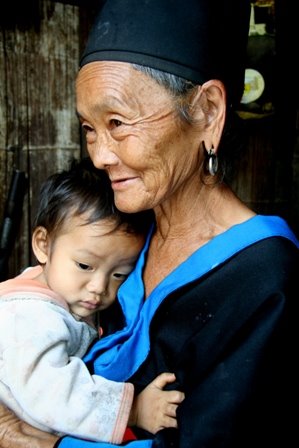

No comments:
Post a Comment